GCSE Results 2026: Grade Gap Calculator, Resits, Costs & What to Do Next
GCSE results 2026 raised the same question for a lot of families: how close was that grade to the next one, and is a resit actually worth it? This guide starts with the free Grade Gap Analyser, then works through GCSE resits 2026: which subjects you can resit, when, realistic resit costs by exam board, how to enter as a private candidate, and what to do next.
Want to check your own result first? Jump straight to the Grade Gap Analyser →
GCSE Results Day 2026 was Thursday 20 August. November 2026 resits are open to eligible candidates for GCSE Maths and English Language only. Nearly every other subject waits for summer 2027. There is no single "GCSE resit price": the awarding body's entry fee is separate from whatever the exam centre charges on top, so the total genuinely varies by board and centre. The Grade Gap Analyser below shows exactly how close a result was to the next grade. That's the starting point for everything else in this guide.
Getting a GCSE result is not always the end of the decision-making. A student might be wondering how close they were to the next grade, whether that gap is worth acting on, when they could resit, what it would cost, where they'd sit the exam, and what happens if a second attempt doesn't go better. This guide brings those questions together in one place for GCSE results 2026, starting with the result itself.
1. Start With Your Result: How Close Were You to the Next Grade?
A grade on its own only tells part of the story. A Grade 6 that's one mark below the Grade 7 boundary is a very different result from a Grade 6 that's twenty marks below it, even though both look identical on a certificate. The Grade Gap Analyser below compares a raw mark against the confirmed June 2026 boundaries and shows exactly where it sits. Enter the exam board, subject and mark for each GCSE to check; add as many subjects as needed.
2. What Your Result Tells You
Once a mark is entered, the analyser shows two things in plain language: how many marks clear of the current grade boundary the result sits, and how many marks below the next grade boundary it falls, for example, "7 marks above your current grade boundary" and "3 marks below the next grade boundary." That second number is the one that matters for what follows.
Being three marks, or even one mark, below the next grade does not automatically mean a resit is the right move. The question that actually decides it is: does the higher grade change what the student can do next? If a sixth form, college course, apprenticeship or employer specifically requires that grade, a small gap is often the strongest case for acting. If nothing specific depends on it, there may be little to gain from spending time and money closing it. The next section works through that decision properly.
3. Should You Consider a Resit?
A resit decision depends on the student's circumstances, not just the size of the grade gap. Before deciding anything, it helps to check a few things directly:
You may want to consider a resit if…
- ✓A specific sixth form, college course, apprenticeship or employer genuinely requires the higher grade
- ✓The result narrowly missed an entry requirement that actually applies to the next step
- ✓There's a clear, specific reason to improve it, not just a general sense that a higher grade would be nice
- ✓There's realistically enough time to prepare properly before the relevant series
Think carefully before resitting if…
- The higher grade isn't actually needed for anything specific in the near term
- Time and effort would be better spent on other subjects or qualifications
- There isn't enough time left before the next available series to prepare effectively
- The main reason is simply "I was close," without a clear purpose behind it
Check this before entering…
- Which exam board and specification the original result was under: resits are normally entered with the same board
- Whether the subject is available in the next series at all (see below)
- The full likely cost, not just the headline entry fee (see the fee section below)
- The entry deadline, which is often weeks earlier than the exam itself
This analyser does not recommend a resit and won't tell a student what to do. It only shows the grade gap. The decision itself depends on personal circumstances that only the student, their school and their family can weigh up.
4. Which GCSEs Can You Resit, and When?
The position for England is confirmed directly by AQA, and the same November restriction applies across every board that runs a November series (AQA, Pearson Edexcel, OCR and WJEC/Eduqas all confirm equivalent rules for their own English and Maths GCSEs):
- GCSE Maths and GCSE English Language have a dedicated November resit series, open only to candidates who are 16 or over by 31 August of that year.
- Every other GCSE subject — English Literature, the sciences, humanities, languages and the rest — can only be resat in the following summer series, alongside the next year group.
There's no limit on how many times a GCSE can be resat, and a resit grade carries the same regulatory standing as a first attempt.
This November Maths/English resit pattern is confirmed for GCSEs sat with AQA, Pearson Edexcel, OCR and WJEC/Eduqas (which regulates GCSEs taught in England under Ofqual using the same 9–1 grading). WJEC's Wales-regulated GCSEs, and CCEA's Northern Ireland GCSEs, still use letter grades (A*–G, with CCEA also using a C* grade) rather than 9–1, so the Grade Gap Analyser above, which is built around 9–1 raw-mark boundaries, applies to AQA, Pearson Edexcel, OCR and Ofqual-regulated Eduqas results, not to WJEC Wales or CCEA letter-graded results. CCEA also runs its own November GCSE English and Maths resit window, but its dates, fees and entry rules should be checked directly with CCEA rather than assumed to match England's boards.
5. GCSE Results and Resit Dates 2026–27
Confirmed directly from AQA's own key-dates documents; other boards run equivalent (though not always identical) November windows.
| Milestone | Date | Source / notes |
|---|---|---|
| GCSE Results Day 2026 | Thursday 20 August 2026 | Confirmed, all boards |
| November 2026 resit entry deadline (AQA) | 4 October 2026 | AQA November 2026/January 2027 fees document; late fee applies from 5 October, very late from 25 October |
| November 2026 GCSE Maths & English exams | Early–mid November 2026 | Exact paper dates vary by board; WJEC/Eduqas and WJEC-Wales Maths components fall on different days from each other. Confirm with your board's published timetable |
| November 2026 resit results | Mid-January 2027 | Consistent across third-party reporting; confirm exact date with your school nearer the time |
| Summer 2027 entry deadline (GCSE) | Typically late February 2027 | Based on the equivalent summer 2026 deadline (21 February 2026) reported by AQA, Pearson Edexcel and WJEC; the specific 2027 date should be confirmed nearer the time |
| Summer 2027 GCSE exams and results | May–June 2027 exams; results in August 2027 | Standard annual pattern; exact 2027 dates not yet published by boards at the time of writing |
The exact summer 2027 entry deadline and exam timetable had not been published by any board at the time this guide was researched. Where a date above is marked as "typically" or "based on," treat it as a reasonable planning estimate from the prior year's equivalent date, not a confirmed 2027 date. Always check your board's own key-dates page before relying on any date for an actual entry.
6. How Much Does a GCSE Resit Cost?
There is no single "GCSE resit price." The total a family actually pays is built from up to three separate charges, and AQA is explicit that the second of these is entirely outside its control:
- The awarding body's entry fee: a fixed, published amount per subject, set by AQA, Pearson Edexcel, OCR or WJEC/Eduqas.
- The exam centre's administration/accommodation fee: covering invigilation, room hire and processing. AQA states plainly that schools and colleges "may charge additional administration/accommodation fees" and that these are "decided by and payable to the school or college," not the board.
- A late entry fee, if applicable, typically doubling or trebling the entry fee depending on the board and how late the entry is.
Two private candidates resitting the identical GCSE through two different centres can end up paying noticeably different total amounts. The board fee is the same, but the centre's charge is not.
Confirmed board entry fees: GCSE Maths, English and Sciences
These figures are taken directly from each board's own published fee documents. Where a board's confirmed November 2026 fee list wasn't available at the time of writing, that is stated rather than estimated.
AQA
| Subject | Series confirmed | Board entry fee | Late fee structure |
|---|---|---|---|
| Maths | November 2026 | £51.20 | Late = entry fee +100% (2× total); Very late = +150% (2.5× total) |
| English Language | November 2026 | £51.20 | |
| Biology / Chemistry / Physics | Summer 2026 (summer-only subjects) | £46.65 each | Same structure as above |
| Combined Science (Trilogy/Synergy) | Summer 2026 | £93.25 | Same structure as above |
Pearson Edexcel
| Subject | Series confirmed | Board entry fee | Late fee structure |
|---|---|---|---|
| Maths | Summer 2026 (June); Nov 2026 fee not yet published | £55.00 | Late = entry fee doubled; Very late = entry fee trebled |
| English Language | Summer 2026 (June); Nov 2026 fee not yet published | £56.40 | |
| Biology / Chemistry / Physics | Summer 2026 | £54.80 each | Same structure as above |
| Combined Science (Double Award) | Summer 2026 | £103.40 | Same structure as above |
OCR
| Subject | Series confirmed | Board entry fee | Late fee structure |
|---|---|---|---|
| Maths | 2025/26 cycle (incl. June 2026); Nov 2026 fee not yet published | £55.50 | |
| English Language | 2025/26 cycle; Nov 2026 fee not yet published | £56.50 | |
| Biology / Chemistry / Physics (either spec) | 2025/26 cycle | £55.00 each | |
| Combined Science (either spec) | 2025/26 cycle | £110.00 |
AQA has published a specific November 2026/January 2027 fee document, so its November figures above are directly confirmed for that series. Pearson Edexcel and OCR's most recent published fee documents at the time of writing covered the 2025/26 cycle (up to and including June/summer 2026, plus November 2025) but did not yet include a November 2026-specific fee list. Their summer 2026 figures are shown as the most recent confirmed reference point; for the actual November 2026 fee, check each board's entry-fees page directly or ask your exam centre, rather than assuming it matches the summer 2026 figure.
7. How Much Will You Actually Pay?
A simple framework covers it: board entry fee + centre administration/accommodation/invigilation fee + any applicable late-entry charge = total cost. The board fee is fixed and published (see above). The centre fee is not standardised anywhere. It's set independently by whichever school, college or private exam centre processes the entry, and can vary considerably between centres for the identical subject and board. This is exactly why AQA is careful to separate "our entry fee" from "additional administration/accommodation fees," which it states are "decided by and payable to the school or college."
In practice this means: a student entering through their own school may pay only the board fee, or a modest centre charge, since the school may absorb some cost as part of continued education. A private candidate entering independently through an external exam centre pays the board fee plus the centre's full administration charge, which third-party centres commonly set anywhere from roughly £100 upward per subject on top of the board fee, but this is a centre-set figure, not a board-set one, so there is no single correct number to quote here. Always get the centre's full quoted total, including the board fee, before entering.
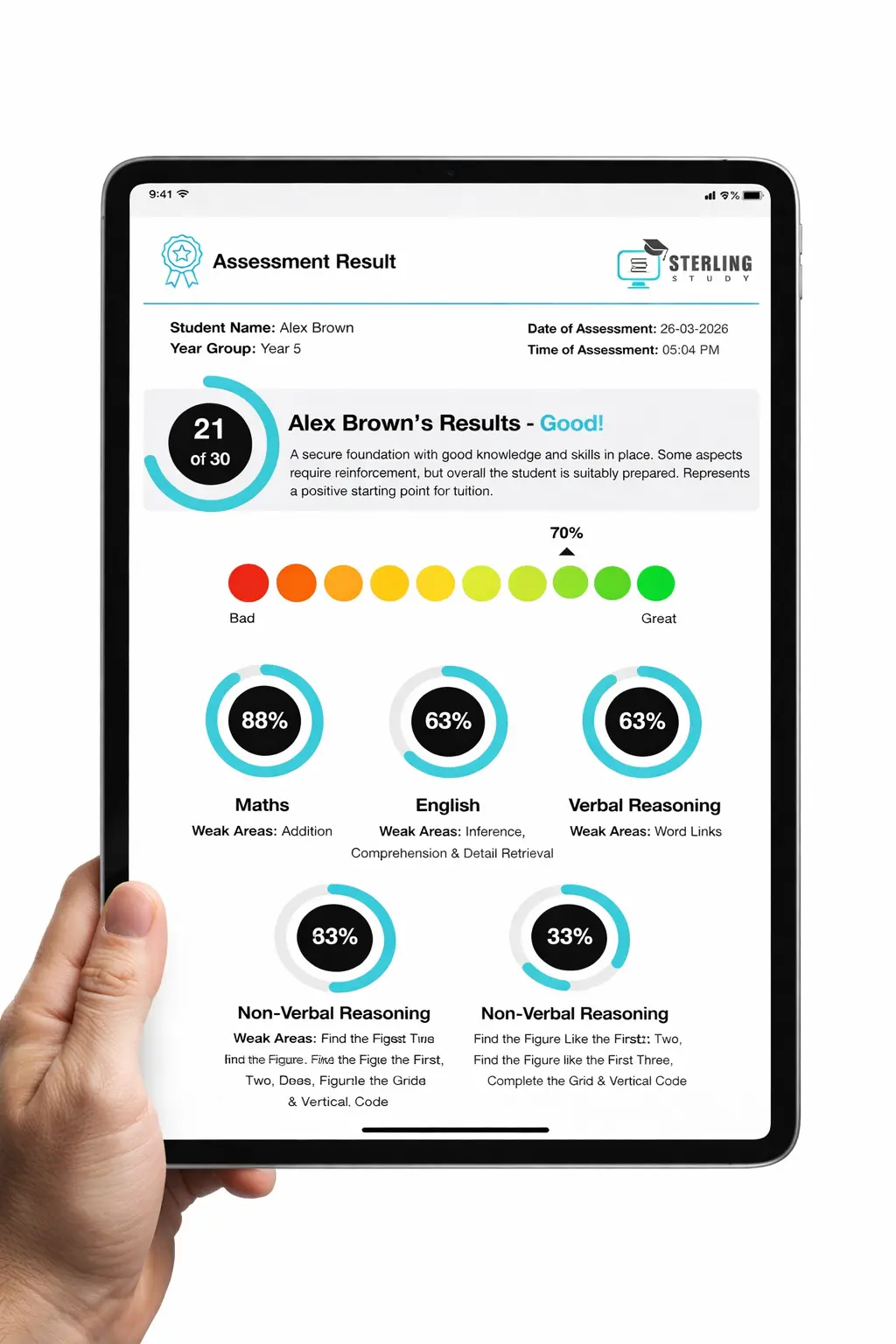
Find out in 30 minutes.
- ✓ Subject-by-subject breakdown of where marks were lost
- ✓ Honest view on whether a resit is likely to be worth it
- ✓ A focused plan built around the specific gap, not a full re-revision
- ✓ No strings attached
8. How Do You Enter a GCSE Resit?
- Check whether the higher grade is actually needed for what comes next.
- Check when the subject can be resat: November (Maths/English only) or next summer.
- Confirm the exact qualification and exam board the original result was sat under.
- Speak to the school or college about entering through them, if still enrolled.
- If entering independently, find an exam centre that accepts private candidates for that board and subject (see below).
- Confirm the full cost in writing, including the centre's own charge.
- Check the entry deadline and enter in good time. It's typically weeks before the exam itself.
- Prepare with a focused plan rather than repeating the same revision.
- Sit the exam.
- Receive the new result: the higher of the two grades is generally the one that stands, though this should be confirmed against the specific requirement it's needed for.
9. Private Candidates: What to Ask an Exam Centre
A private candidate is anyone entering an exam who isn't currently enrolled at the centre hosting it, including students who've left school, home-educated students, and adults resitting years later. It is not possible to register directly with an awarding body and sit a regulated GCSE examination from home; every private candidate must go through an approved exam centre that accepts private candidates for the relevant board and subject. Centres differ in which boards, subjects and practical/NEA components they can accept, so this needs checking before assuming a subject is available.
A short checklist to work through with any centre before entering:
- ✓Do you accept private candidates?
- ✓Which exam board and specification do you offer for this subject?
- ✓What is the total cost, and does it include the board's entry fee?
- ✓Are there separate administration or invigilation charges on top?
- ✓Do you accept the relevant practical or NEA component for this subject, if there is one?
- ✓What is your own internal entry deadline (which may be earlier than the board's)?
- ✓What identification or Unique Candidate Identifier (UCI) do you need from a previous sitting?
10. Can You Resit a GCSE Online?
Preparing for a resit online — through tuition, courses or independent study — is entirely possible and increasingly common. Sitting the regulated GCSE examination itself is not something that can be done from home: it still has to take place at an approved exam centre, under the same supervised conditions as any other candidate. Anyone offering a genuinely at-home official GCSE sitting is not offering a regulated GCSE.
11. What If You Do Worse in a Resit?
A resit is a genuine second attempt, not a guaranteed improvement. Before entering, it's worth being clear that:
- The exam is marked to the same standard as any other sitting, with no adjustment for it being a retake.
- Preparation quality matters far more than simply having "another go."
- Exactly how a lower resit result is treated can depend on the qualification and the institution it's being used for. Check with that institution directly rather than assuming a universal rule.
Most students who prepare with a focused plan do improve on a resit, but going in assuming an automatic uplift is the wrong mindset. The useful question beforehand is whether there's a realistic, structured plan to close the specific gap, not just whether another exam date exists.
12. Review of Marking or Resit?
A review of marking is a different process from a resit: it checks whether the original paper was marked correctly against the mark scheme, rather than giving a fresh attempt. It carries its own deadline and its own risk, and is not automatically the safer option just because it's faster.
- A review of marking can move a grade up, down, or leave it unchanged. There is no "grade protection," so schools require written consent before requesting one.
- For the summer 2026 GCSE series, the standard review of marking deadline is 24 September 2026 across both AQA and Pearson Edexcel.
- A copy of the marked paper (access to scripts) is free to request from AQA, and helps decide whether a review is actually worth submitting before paying for one.
In practice, a review makes most sense when there's a specific reason to think the marking itself was wrong, not simply because a result was disappointing. Sterling Study's GCSE Results Day 2026 guide covers the review and appeals process in more depth.
13. How to Prepare for a Resit
The most effective preparation for a resit is targeted, not repeated. That generally means diagnosing exactly which topics cost the most marks last time, building a study plan around those specific gaps rather than the whole syllabus equally, practising real exam questions under timed conditions, reviewing mistakes properly rather than just marking them right or wrong, and tracking progress against the actual grade boundary rather than a vague sense of "getting better."
14. What Should You Do Now?
- Check the grade gap using the analyser at the top of this page.
- Check whether the higher grade is actually required for a specific next step.
- Check the resit opportunity: November for Maths/English, summer 2027 for everything else.
- Check the full likely cost, including the exam centre's own charge, not just the board fee.
- Check the entry deadline and enter in good time.
- Decide between a resit, a review of marking, or no action based on what's actually needed.
- Make a focused preparation plan if resitting, built around the specific topics that cost the marks.