Changing Schools in England: The Complete Parent's Guide
Whether you're moving house, changing schools mid-year, or switching your child out of a school that isn't working, here's everything a parent needs to know: the process, whether a move is the right call, what changes at each age and stage, and how to make sure GCSEs or A-levels don't take the hit along the way.
Just moved schools, or thinking about it? Our free assessment is one way to check where your child stands →
Changing schools in England usually means an "in-year application," with a decision due in writing within 15 school days, so the process itself is rarely the hard part. The part families miss is the academic side: if your child is in Years 10 to 13, a different exam board, specification or syllabus position at the new school can quietly create a gap that only shows up at the next test. Check that before you accept the place, not after.
A school move rarely goes wrong on the day everyone's watching. The paperwork gets sorted, the uniform gets bought, the first morning goes fine, and then a few weeks later a test comes back lower than expected, because nobody checked whether the new school was teaching the same exam board, at the same point in the syllabus, as the one your child just left.
Before You Move: Quick Checklist
- Year-group availability at the new school
- Admission route: apply to the school directly, or through the council
- Exam boards for each subject
- Specifications for each subject
- Topics already covered vs what the new class has done
- Subject options actually available at the new school
- NEA, coursework and exam-entry arrangements
- Transport
- Pastoral arrangements and settling-in support
1. Should You Change Your Child's School?
Before the process itself, pause on the decision. A move can be right when problems remain unresolved despite reasonable attempts to fix them. At the same time, speaking to the current school first can sometimes resolve issues without a transfer being necessary at all, so be honest with yourself about which situation you're actually in before you commit.
Consider staying if:
- The issue is isolated and is actively being addressed by the school.
- Academic progress is genuinely good, even if this particular week has been rough.
- Your child has strong, established friendships they'd be leaving behind.
- Pastoral support is improving, not just promised.
- The problem has a realistic, time-bound solution already in motion.
Consider moving if:
- Bullying remains unresolved despite raising it formally.
- There's a genuine safeguarding concern.
- The school can't meet your child's educational needs, including EHCP requirements.
- Your child's wellbeing is visibly deteriorating, not just having an off week.
- The school can't offer the GCSE or A-level subjects your child needs.
- Repeated interventions haven't worked and the school has run out of realistic next steps.
If you're weighing this up because of bullying specifically, take a look at section 8 below before deciding. A move can help, but it works best alongside, not instead of, formally raising the issue with the current school.
2. How to Change Schools in England: The Step-by-Step Process
Once you've decided a move is right, most changes go through an "in-year application," the term used for any change outside the normal Reception, Year 7 or sixth form transfer point. You'll need one whether you're moving primary schools after a relocation, changing secondary schools because the fit isn't right, or transferring schools mid year for any other reason.
Where you apply depends on the school's admission authority. Academies, foundation schools and voluntary aided schools can be their own admission authority, although some arrange for the local authority to coordinate their in-year applications on their behalf instead. Community and voluntary controlled schools go through your local council. Check the school's website or your local council's guidance to see exactly where you need to apply, since GOV.UK's academy admissions guidance confirms this varies from school to school.
If your child has an education, health and care plan (EHCP), contact your local authority's SEND team before applying to transfer, as the process for identifying a suitable school and securing the right provision can involve additional steps. And if the school you want is full, arrangements vary by local authority: some will add your child to a waiting list or point you toward nearby schools with vacancies, so check your own council's guidance directly rather than assuming every area works the same way.
3. What Changes by Year Group: The Risk Map
The basic application process is similar whatever age your child is, but the practical and academic considerations change considerably by year group. Knowing roughly what to expect before you commit to a date helps, while remembering that individual circumstances matter more than any general pattern.
| Year Group | Potential Level of Disruption | What to Check |
|---|---|---|
| 🟢 Reception–Year 6 | Generally lower | Friendships, routines, reading/writing progression, maths methods, transport. |
| 🟢 Year 7 | Generally manageable | Usually easier, since everyone is already adjusting to secondary school. |
| 🟢 Years 8–9 | Generally manageable | Languages, GCSE option timing, science progression, curriculum sequencing. |
| 🟠 Year 10 | Requires detailed academic checks | GCSE options, exam board, specification, topics already covered, NEA, practicals. |
| 🔴 Year 11 | Requires detailed academic checks | Exact exam boards, exam entries, remaining syllabus, coursework status, mock timetable, whether the school will accept the student onto every course. |
| 🟠 Years 12–13 | Requires detailed academic checks | Specification, subject combinations, coursework, predicted grades, UCAS timing. See section 9. |
These are general patterns, not guarantees. Some children handle a Year 10 move brilliantly; others find even a Reception move properly unsettling. Use this table as a starting point for the right questions, not as a fixed prediction for your child.
Leicestershire's own guidance advises against moving once a two-year GCSE course has started, since the new school may not be able to offer the same modules or options. That's not a reason to rule out a Year 10 or 11 move altogether, but it's a fair warning that the academic checklist below matters more than the paperwork at this stage.
4. Changing Schools During GCSEs: The Academic Checklist
Before accepting the place, check these things first: exam board, specification, topics already covered, subject options, and NEA/coursework and exam-entry arrangements. If any of these differ, ask the new school what the transition plan will be before your child starts.
Multiple councils, including Thurrock, warn that a new school may have a different syllabus, a different exam board, or different subject options, and that coursework marks can potentially be affected. What they don't do is show parents how to check for this systematically. Here's how.
Exam board
One school might sit AQA, another Edexcel, another OCR. Ask both schools which board they use for each subject before the move, not after.
Specification
Even on the same board, specifications get updated, and a school can be teaching the current one or the previous one. Ask for the exact specification code.
Topics already covered
Request a topic list or scheme of work from the new school so you can see what's been taught and what hasn't. This is one of the most useful documents you can get hold of.
Subject options
Confirm the new school actually offers every subject your child is currently taking. Option blocks fill up, and a popular subject might already be full for the year.
NEA and coursework
Rules on transferring non-exam assessment vary by qualification and exam board. Ask the new school and the relevant exam centre whether completed work can be carried forward, whether it needs to be assessed again, and whether any practical or authentication requirements apply.
Exam entries
For Year 11 especially, confirm who is responsible for entering your child for each exam, whether any existing entries at the old school need to be transferred or amended, and by when this needs to happen.
Mock exams
Ask when the new school's mocks fall. If they're imminent, your child may be sitting a mock on unfamiliar content within weeks of arriving, better to know in advance than discover it on the day.
5. The GCSE School Transfer Audit
Before accepting a new school place for a Year 10 or 11 student, build a simple table like the one below for each subject. The rule to hold onto throughout: don't compare school names, compare the course.
| Check | Old School | New School |
|---|---|---|
| GCSE subject | e.g. Maths | e.g. Maths |
| Exam board | e.g. AQA | e.g. Edexcel |
| Specification | ||
| Tier | Higher / Foundation | Higher / Foundation |
| Topics completed | ||
| Current class topic | ||
| Set texts (English) | ||
| NEA / coursework | Started / not started | Accepted / not offered |
| Required practicals | Completed | Different requirements? |
| Exam entry status | Confirmed | To be confirmed |
Fill one of these in per subject before the move rather than after. Where the two columns differ significantly, ask the new school to identify which differences need immediate attention and which can safely be covered through normal teaching.
6. Do Different Exam Boards Really Matter?
A natural parent reaction is: surely GCSE Maths is GCSE Maths, whichever board sets it? The broad subject content is often similar, but two things vary enough between boards to catch a transferring student out: the order topics are taught in, and the depth or terminology expected on a given topic, even when the topic name looks identical on paper. This matters most in subjects like GCSE Science and GCSE English, where practicals, set texts or specification content can differ between boards in ways that matter. The specific checks for each subject are covered in section 4, and the audit in section 5, rather than repeated here.
7. Can Changing Schools Affect Your Child's Grades?
Changing schools can affect academic performance, particularly when a student loses teaching time, encounters a different curriculum sequence, or has to adjust to a new assessment approach. The move itself does not automatically lower grades, but the transition can create academic disruption if it isn't planned, which is exactly what sections 4 to 6 above are designed to catch before it becomes a problem.
New curriculum.
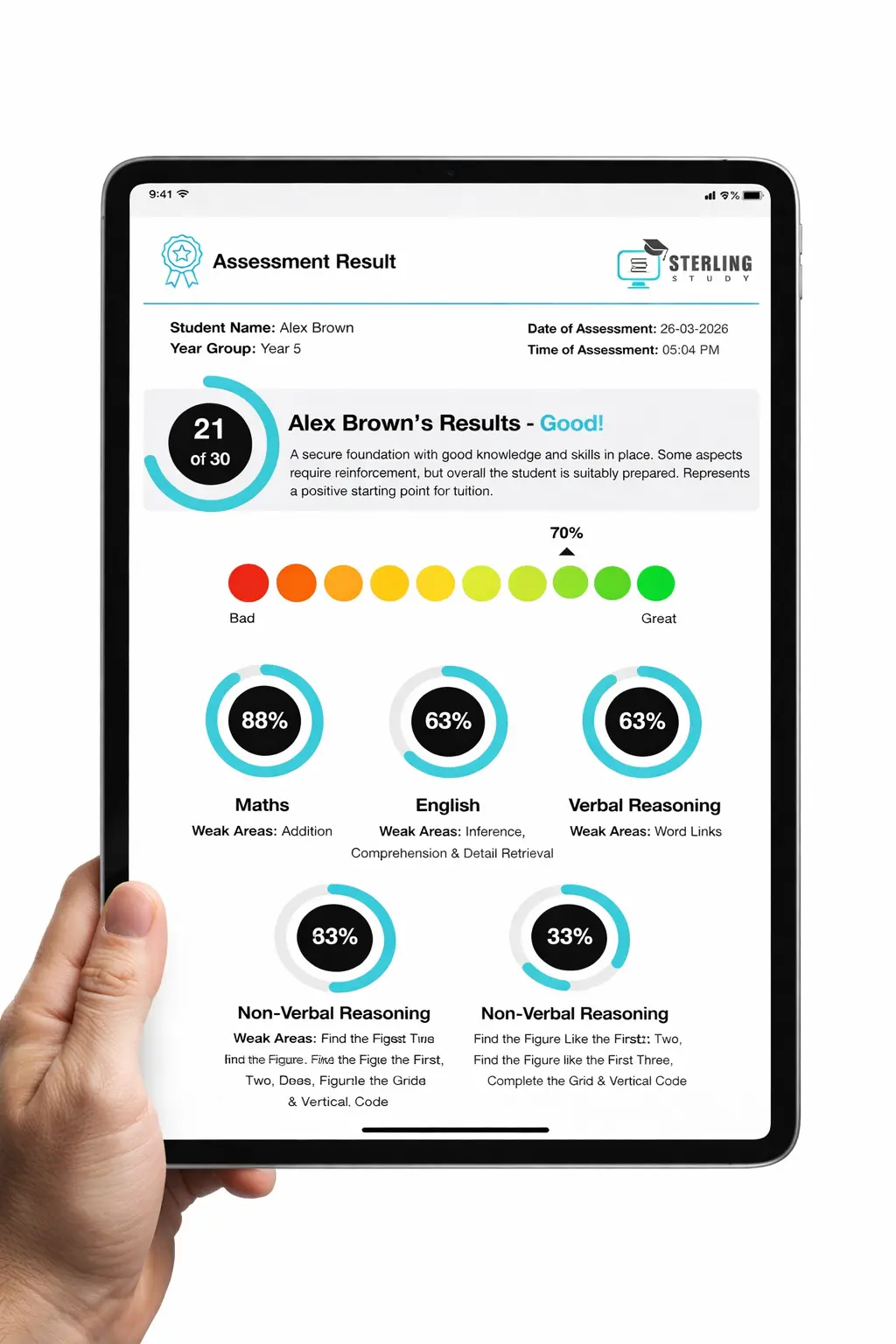
Know where they stand.
- ✓ Subject-by-subject breakdown across Maths, English and Science
- ✓ Shows your child's current working level and areas for improvement
- ✓ Detailed PDF results sent immediately
- ✓ No strings attached
8. What Happens Emotionally After a Move?
Is changing schools bad for a child? The honest answer is that it's a genuine adjustment, not a neutral event. Many children need some time to settle, and the length of that adjustment varies from child to child. That's normal, not a sign something has gone wrong.
What tends to help is predictability at home while everything else is new: familiar routines, a visit to the new school before the first day where possible, and space for your child to talk about how they're feeling rather than being told how they should feel. Children who understand why the move is happening and what to expect generally settle faster than those who feel it's simply happening to them.
A settling-in period is normal. Persistent low mood, ongoing sleep problems, or a real reluctance to attend that doesn't ease after the first few weeks should be flagged with the new school's pastoral team and, where appropriate, a healthcare professional, rather than waited out. You know your child best, and it's always reasonable to ask for support sooner rather than later.
Changing schools because of bullying
For some families, the move is the solution, not the cause of a new problem. If bullying is the reason, raise it formally with the school and keep a record of concerns and responses, particularly if the situation is ongoing or you may need to escalate it. A fresh start does help many children in this situation, especially when the new school is briefed in advance so staff can look out for your child in the first few weeks, though the underlying issue still needs addressing directly rather than relying on the move alone.
9. Changing Schools or Sixth Form During A-Levels
Years 12 and 13 bring a different set of problems to Years 10 and 11. A-Level content varies more between exam boards than GCSE content does, so specification differences matter even more here.
- Check that the new sixth form follows the same exam-board specification, not simply the same subject title, and confirm whether any required practical, NEA or other assessed components have already been completed.
- Confirm the new sixth form actually offers the same subject combination, not just the same individual subjects.
- Ask how coursework or NEA already completed will be handled, and whether your child's current work and assessment record can be recognised by the new centre.
- A-level study assumes a level of independent work that varies a lot between schools, so ask what's expected outside timetabled lessons.
- If your child is applying to university, check how predicted grades and references will be handled, and confirm UCAS deadlines aren't affected by the move.
- Check whether the sixth form accepts transfers during the academic year at all, and whether your child can continue their existing subject combination without timetable conflicts.
10. The First 30 Days After Changing Schools
Getting the place is the easy part. The first month provides an opportunity to spot practical, social and academic issues early, before they have a chance to grow. Here's a simple structure to work through.
| Days 1–3 | Timetable, teachers, uniform and equipment, homework systems, school rules, pastoral contact. |
| Week 1 | Check subjects, current topics, textbooks and resources, and confirm exam boards where relevant. |
| Week 2 | Compare what your child has already studied against what the new class has covered. |
| Week 3 | Identify any knowledge gaps, confidence gaps, or missing assignments and practical work. |
| Week 4 | Put a plan in place for anything identified in Week 3, rather than waiting for the next report. |
Settling in and academic continuity are two separate things and should be judged separately. A child can seem perfectly happy socially by the end of week one while still sitting on a gap that won't show up until the next assessment.
11. Identifying Where Your Child May Need Support
If the Week 2 and 3 steps above turn up something specific, whether that's a particular topic, a different point in the syllabus, or simply lost confidence after a rocky start, the aim is to find out exactly what's going on before trying to fix it. Our PhD-led team, founded by Dr Patel and Dr Pupko, works regularly with students in exactly this position, and a short diagnostic assessment, around half an hour covering Maths, English and Science, is one way to help identify where support may be needed.
At Sterling Study, tutors are DBS-checked and safeguarding is overseen by a named Safeguarding Officer, Ms Yesha Mukhtiar. Whichever provider you choose, ask about their vetting process alongside their results.
12. 7 Mistakes Parents Should Avoid When Changing Schools
13. School Transfer Checklist
- Exam-board and specification details for Years 10–13
- Proof of address (if the move is due to relocation)
- Uniform and equipment lists from the new school
- Transport arrangements, including eligibility for assistance
- Sibling links, if applying for more than one child
- Any EHCP paperwork routed through the SEND team
- Recent school reports and test results, kept for your own records
- The GCSE Transfer Audit above, completed per subject, for Years 10–13
14. Records, Documents and Practical Considerations
School records are normally transferred between schools once a place is confirmed, but check with both schools if you need copies of specific documents, especially if you're an international family arriving in England or the previous school is overseas. Keep hold of any recent school reports and test results yourself in the meantime; they're genuinely useful for the new school's teachers in the first few weeks, and for anyone helping your child with specific subjects.
15. What If the School Refuses a Place?
If your application is refused, the admission authority should explain your right to appeal and how to submit one. Waiting-list arrangements and alternative-school support vary by local authority, so a refusal isn't necessarily a dead end, just a reason to check your own council's guidance on next steps. Where a child has been repeatedly unable to secure a suitable place, some local authorities' Fair Access Protocols exist to help resolve harder cases, though this applies to particular circumstances rather than guaranteeing a place at any specific school.