Live Online Python Classes for Kids and Teens
Give your child a real head start in coding. Our live online Python classes for kids and teens turn complete beginners into confident programmers who build their own games and apps, guided by DBS-checked tutors with 10+ years of coding experience and overseen by PhD scientists.
What Students and Parents Say
Reviews from parents and students on our online Python coding classes.
"My son started the Python Beginner course with no experience at all. Within weeks he was building small programs and asking to do more. His Computer Science teacher noticed the improvement immediately. Completely worth it."
"The way Shubham explains Python is brilliant. My daughter was struggling with functions but the tutor broke it down so clearly. She is now doing her A-Level CS coursework with real confidence."
"I already do 11+ tuition here and added the Python course. The discount was a nice bonus but honestly the quality is what kept us. The tutors know their stuff and explain it to kids in a way that really sticks."
Four Levels, One Clear Progression
Our four-level programme is designed to meet students where they are and build their skills progressively. Each level runs for 12 weeks, with one live hour-long lesson each week and no more than 6 students learning together at the same level.
Level 1: Beginner
Ages 8 to 10, no experience needed. Python fundamentals and logic.
- Variables, data types and basic maths operations
- Working with text using string functions
- True/false logic, comparisons and if-elif-else decisions
- Projects: Number Guessing Game, calculator and Rock, Paper, Scissors
Level 2: Intermediate
Ages 11 to 13, knows the basics. Loops, functions and lists for writing smarter, shorter code.
- For and while loops with ranges, break and continue
- Reusable functions with parameters and return values
- Lists: indexing, slicing, append, pop and sort
- Projects: shopping list manager, loop-based quiz and a menu-driven app
Level 3: Advanced
Ages 14 to 16, a confident coder. Data structures and object-oriented programming.
- Tuples, and when to use them instead of lists
- Dictionaries: key-value pairs, looping and a dictionary quiz
- Classes, objects, attributes and methods, plus an introduction to inheritance
- Projects: game character with health and attack, and a class-based text game
Level 4: Professional
Ages 16 to 18, A-Level and beyond. File handling, error handling and a full final project.
- Reading, writing and storing data in files
- Error handling with try, except and finally
- Planning, building, debugging and testing a larger program
- Final project: a quiz app, text game or journal app, presented to the class
The 12-Week Python Curriculum for Every Level
Every lesson in our Python course for kids is planned in advance, so you always know exactly what your child is learning, week by week.
Level 1: Python Fundamentals
Variables, data types, operations and decisions, getting comfortable with Python's syntax.
Level 2: Loops, Functions and Lists
Repeating tasks efficiently and working with more complex data.
Level 3: Dictionaries, Tuples and OOP
More complex data structures and organising programs with object-oriented programming.
Level 4: Python Projects and Advanced Topics
File handling, error handling and a full final project, built in Replit and VS Code.
Group Classes vs 1-to-1 Tutoring
The strongest young programmers learn by sharing ideas, explaining their thinking and solving problems alongside others. That is why Sterling Study teaches Python to kids and teens in groups rather than one-to-one.
Sterling Study Group Coding Classes
- Children compare solutions and discover more than one way to crack a problem
- Students learn to debug their own code, the habit real programmers rely on most
- A set Python curriculum, so every session builds on what was learned the week before
- Talking through code with others builds the communication skills used in real software teams
Typical 1-to-1 Python Tutor
- Your child codes alone, with no classmates to swap ideas or compare different approaches with
- Easy to lean on the tutor to fix every error, rather than working it out themselves
- Content and pacing depend on the individual tutor, often with no set curriculum to follow
- Little chance to explain code out loud, present finished work or practise working as a team
How Our Online Coding Classes Work
From the first conversation to the final project presentation, here is what your child's journey through our online coding classes looks like.
Book a Free Assessment
We find out what your child already knows about coding, whether they have never written a line or already build their own programs. No contract and no commitment.
Matched to the Right Starting Point
Based on the assessment, we recommend where your child should begin, so they are challenged from the very first lesson without feeling lost.
Learn, See, Practise
Every lesson follows the same rhythm: the day's learning goals, a live walkthrough of real code examples, then practice programs your child writes during the session. Beginners code in the browser, while advanced students move on to Replit and VS Code.
Project Weeks
Each course builds towards dedicated project weeks where students put everything into practice, from a Number Guessing Game in Level 1 to a final app of their own design in Level 4.
Review, Present and Progress
A review week pulls every topic together before the final project. Students then present their work to the class, receive a Certificate of Achievement and are ready for the next level.
The Coding Skills Your Child Will Build
Our Python curriculum rests on four pillars of computational thinking, taking students from their very first line of code to building complete applications with confidence.
Foundational Programming & Logic
The building blocks every programmer needs: how computers follow instructions, and how to write Python programs that react to the user.
- Store and work with text and numbers
- Write programs that make their own decisions
- Turn real-world rules into working logic
- Build interactive programs that respond to input
Algorithmic Thinking & Automation
Breaking big problems into small, manageable steps, then using loops and functions so the computer takes care of all the repetitive work.
- Automate repetitive tasks instead of copying code
- Plan a solution before writing a single line
- Write tidy, reusable blocks of code
- Spot patterns that make programs shorter and smarter
Data Structures & Objects
How real software organises information, and how programmers model the world in code.
- Choose the right way to store different kinds of data
- Look up information instantly with key-value pairs
- Model real things as objects with their own data and actions
- Build new classes on top of existing ones
Advanced Software Development
The professional habits universities and employers look for in a strong Python programmer.
- Save and load data so programs remember information
- Make software that handles mistakes gracefully
- Plan, build, test and present a complete project
- Write code that other people can read and maintain
Meet the PhD Scientists
Our founding team of PhD scientists from Imperial College and UCL oversee every Sterling Study course, including Python. Lessons are taught by coding tutors with 10+ years of real programming experience.
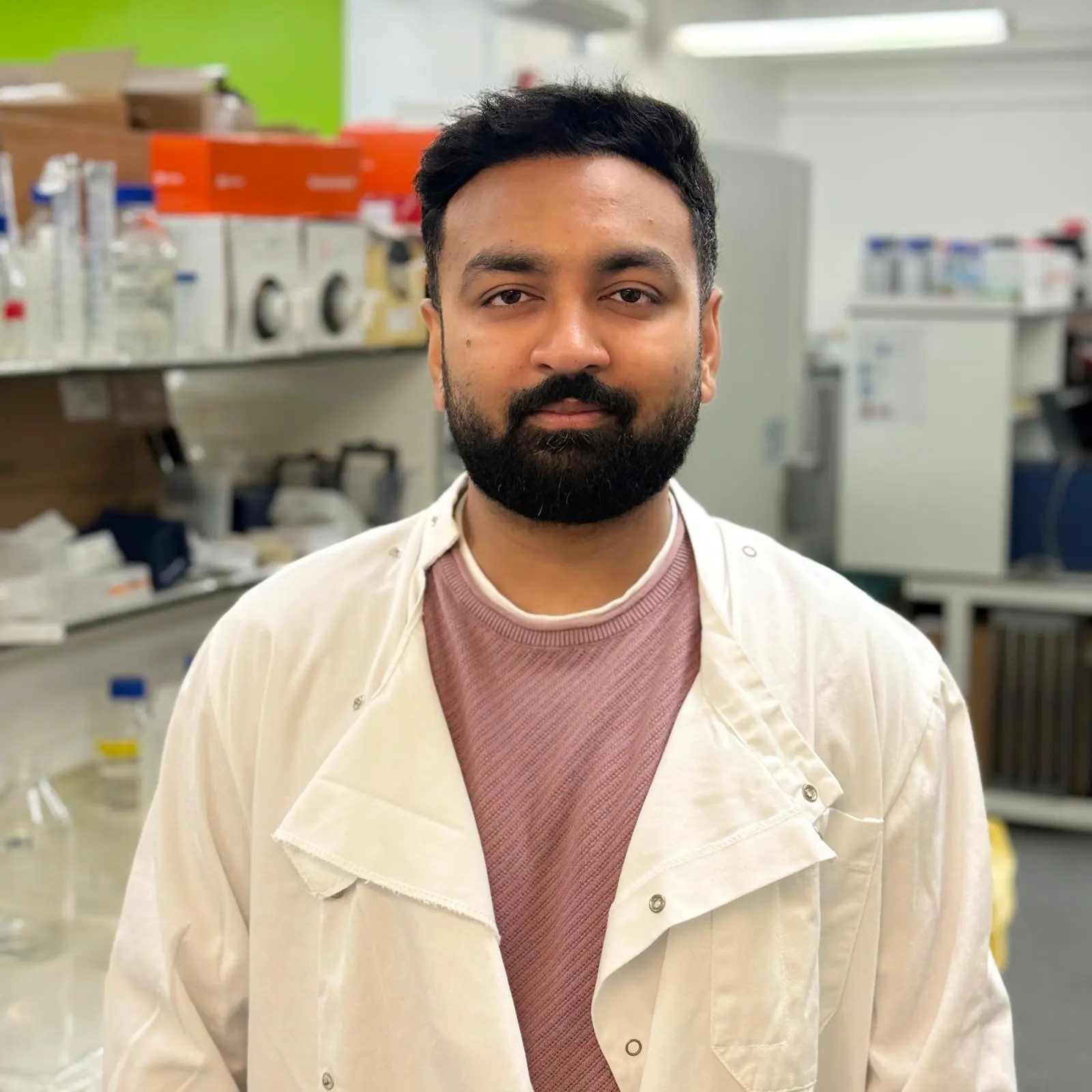
Parth holds a Neuroscience PhD from UCL and an MSc from Imperial College London, with research experience at the Francis Crick Institute. His background is in the science of how the brain learns and retains information.
Why this matters for your child: Parth brings proven memory and recall techniques to how our Python lessons are structured, so students don't just follow along in class, they remember how to write the code on their own the next week.

Igors holds a PhD in Genetics from the University of Surrey and works as a Specialist Scientist at UCL. He leads curriculum design at Sterling Study, turning demanding material into clear, structured lessons students can actually follow.
Why this matters for your child: our four Python levels build step by step, from a first variable to object-oriented programming, so every new idea rests on one your child already understands.
How Learning Python Helps at School
The habits children build writing Python carry straight into the classroom, from KS3 maths and science to written answers and presentations.
Logic and Reasoning
Writing if-elif-else decisions and true/false comparisons trains children to test ideas precisely and spot the flaws in their own thinking, the same careful reasoning that pays off in maths, science and exams.
A Head Start in Computer Science
GCSE and A-Level Computer Science both include programming. Students who arrive already confident with loops, functions and classes can focus on exam technique instead of learning to code from scratch.
Maths in Action
From building a calculator in Level 1 to sorting lists in Level 2, coding turns maths into something students use, building real fluency with numbers, patterns and formulas.
Confident Communication
Presenting finished projects to the class and explaining how their code works builds clear, structured communication that strengthens written answers and presentations in every subject.
Why Parents Choose Sterling Study
Expert coding tutors, measurable progress and a system that keeps both students and parents informed every step of the way.
Built Around Computer Science Exams
Our four Python levels cover the programming skills tested in AQA and OCR Computer Science, from variables and loops at Level 1 to object-oriented programming at Level 4.
Data-Driven Progress Tracking
Monthly progress tests, results shared via WhatsApp, and group adjustments based on real performance data. Learn about our tracking system →
Parent App & Learning Portal
Track your child's coding progress, view areas of concern, manage payments, and earn referral coupons from the Sterling mobile app. Explore the app →
Free Assessment, No Contract
Every family starts with a free assessment to find the right level for their child. There is no contract, so you can judge the fit before committing.
Frequently Asked Questions
Answers to the questions parents ask most about Python coding classes for kids and teens.
Explore More Sterling Study Courses

Latest Coding Resources & Guides
Expert advice for parents on coding, Python and preparing for GCSE Computer Science.
Book a Free Assessment
We reply within two hours and place your child at the right level. No contract.
Book Free Assessment →By submitting you agree to our Privacy Policy.
Contact Us Directly
Mon to Sat, 9am to 7pm
We respond within two hours
Online tuition - learn from anywhere in the UK
Start Your Child's Python Journey Today
Live online Python classes for ages 8 to 18. Small groups, 12 weeks, certificate included. Led by PhD scientists and taught by tutors with over 10 years of coding experience.
Book a Free Assessment →Save 20% on Your Child's Python Course
Book your free assessment today and get 20% off your child's first 12-week Python course. Places in our small coding groups are limited.
Claim My 20% Off →