How to Read Your A Level Results 2026: Grades, UCAS Points & Clearing Explained
A Level Results Day 2026 is Thursday 13 August. This guide walks through exactly how to read your results slip, work out your UCAS points, and understand what your grades mean for Clearing and university, with a working results calculator, sourced from JCQ and UCAS.
Missed a grade you needed? Book a free diagnostic to find out exactly what a resit should focus on →
Last updated: 13 August 2026 · Reviewed by Dr Igors Pupko · Next review: before A Level Results Day 2027
Thursday 13 August 2026. Results from your school or college: from 8:00am. UCAS Hub application status: updates from 8:00am. A Clearing choice can be added: from 1:00pm. GCSE Results Day 2026: Thursday 20 August. Got your grades? Scroll to the Results Analyser below to see your UCAS points and what your profile means.
There is no gentle way to describe A Level Results Day: it is one of the highest-stakes mornings of a young person's life, and most parents feel every bit as anxious waiting on the other side of it. What is harder than the logistics is knowing what to do with the number on the slip, whether that's your UCAS Tariff total, whether Clearing is worth a phone call, or when a resit genuinely beats scrambling for a different course. This guide, reviewed by Sterling Study co-founder Dr Igors Pupko (PhD Genetics, University of Surrey), covers all of it, with a working Results Analyser below.
This guide covers JCQ qualifications (England, Wales and Northern Ireland). Scottish results follow a separate timetable through Qualifications Scotland.
A Level Results Day 2026: The Quick Answer
A Level results for JCQ qualifications in England, Wales and Northern Ireland are published on Thursday 13 August 2026. Schools and colleges receive results electronically the day before, but no student can see their own grade until results day itself. Most centres release results according to their own arrangements, while UCAS Hub begins updating application statuses from 8am. If you need Clearing, eligible applicants can add a Clearing choice from 1pm. AS results are released the same day, and GCSE results follow a week later, on 20 August.
This guide covers JCQ qualifications. Qualifications Scotland (formerly the SQA) results day is Tuesday 4 August 2026, two weeks earlier than A Level results day, covering National 5, Higher and Advanced Higher. UCAS Track updates for Scottish qualifications from 8am, with Scottish Clearing opening at 9am the same day. If you sat Scottish qualifications, check Qualifications Scotland's own results guidance rather than the JCQ dates in this article.
2026 Results Day and Clearing key dates
| Date | What happens |
|---|---|
| 4 August 2026 | Qualifications Scotland results day (National 5, Higher, Advanced Higher) |
| 2 July 2026 | Clearing opens; vacancies become searchable on UCAS |
| 12 August 2026 | Results sent to schools and colleges under restricted access; no student sees a grade yet |
| 13 August 2026 | A Level Results Day (JCQ: England, Wales, Northern Ireland) |
| — 8:00am | Schools begin releasing results; UCAS Hub starts updating with application status |
| — 1:00pm | Eligible applicants can add a Clearing choice in UCAS Hub |
| 20 August 2026 | GCSE Results Day |
| 19 October 2026 | Clearing closes; final date to add a Clearing choice |
From 8am you can see whether your firm or insurance choice has been confirmed, and UCAS may already show you Clearing matches, suggested courses based on your application and qualification information. What you can't do before 1pm is add a Clearing choice in the Hub, even against a match you can already see. If your Hub status hasn't updated by 8am sharp, log out and check again in a few minutes.
A Level Results Day 2026: Live Updates
A simple timeline for the morning itself. This section is designed to be updated with official 2026 statistics and grade-boundary figures once they're published on the day.
What Actually Happens at 8am on Results Day?
- ✓Your school or college releases your actual A Level grades, according to its own arrangement.
- ✓Your UCAS Hub starts updating separately, showing whether your firm or insurance choice has confirmed your place, and any Clearing matches you're eligible for.
- ✓UCAS does not show your individual subject grades; it only reflects your application status once your school has submitted results.
- ✓A Clearing choice cannot be added until 1pm, even for students who can already see a match earlier that morning.
Your school gives you your grades. UCAS tells you what's happened with your university application. They update at similar times, but they are not the same check. UCAS itself isn't where you view your individual subject grades, it receives results and passes the relevant information to universities, while the actual results-release arrangement is handled by your school or awarding organisation.
UCAS hasn't updated — what should I do?
- ✓Wait a few minutes and refresh; Hub can take time to update for everyone at once.
- ✓Check your school's own results information in parallel, don't wait on UCAS alone.
- ✓Check whether your firm or insurance university has already contacted you directly.
- ✓Contact UCAS or the university directly if the issue persists past the morning.
A Level Results Analyser 2026
Enter your subjects and grades below for an instant UCAS Tariff total and grade profile. This is a genuinely interactive calculator, all working entirely in your browser.
UCAS Tariff points are an indication only. Universities set their own entry requirements and may require specific grades in specific subjects, meeting a Tariff total does not guarantee admission.
What Do My A Level Grades Mean?
- ✓A* — the highest available A Level grade.
- ✓A — a high level of attainment, though its significance for university depends on the specific course.
- ✓B — a strong result, sufficient for the entry requirements of many university courses.
- ✓C — a solid pass, meeting requirements for a wide range of courses.
- ✓D/E — recognised passes; E is the minimum grade needed for the qualification to be awarded at all.
- ✓U — ungraded; the qualification wasn't awarded for that subject.
But don't judge a result in isolation. An AAB profile may be more than enough for one course and short of another; the right way to judge results is against the requirements of the course you actually want, checked directly on the university's own course page.
How to Read Your A Level Results Slip
Your results slip lists a few standard fields for each subject: your candidate details, the exam board and specification code, and the grade itself. It's a simple document, but it's worth knowing exactly what you're looking at before you start working out points or checking offers.
| Field | What it means |
|---|---|
| Candidate name & number | Identifies you and your exam entry; check this matches your details exactly. |
| Centre number | Identifies your school or college as the exam centre. |
| Subject & specification code | The exact course and exam board syllabus you were assessed against. |
| Grade | Your result for that subject, A* to U. |
Worked example: reading a real set of results
Say your slip shows this:
| Subject | Exam board | Grade |
|---|---|---|
| Mathematics | Edexcel | A |
| Chemistry | AQA | B |
| Biology | OCR | A |
Here's how to read that in practice — the same AAB result checked against five different ways a university might phrase its offer:
| What you're checking | Applied to this result | Outcome |
|---|---|---|
| Overall profile | Grades sorted highest to lowest: A, A, B | AAB |
| UCAS points | 48 (A) + 48 (A) + 40 (B) | 136 |
| Grade-based offer | Requirement: "AAB", any subjects | ✓ Meets it |
| Subject-specific offer | Requirement: "AAB including an A in Mathematics" — Mathematics is graded A here | ✓ Meets it |
| Subject-specific offer | Requirement: "AAB including an A in Chemistry" — Chemistry is graded B here | ✗ Does not meet it |
| Two named subjects | Requirement: "AAB including A in both Mathematics and Biology" — both graded A here | ✓ Meets it |
| Points-only offer | Requirement: "128 UCAS points, any subjects" — this profile totals 136 | ✓ Meets it |
The fourth and fifth rows use the exact same AAB result but land on opposite outcomes, purely because of which subject the university named. That's the whole reason a Tariff total or an overall grade profile isn't the full picture: the same three letters can pass one course's requirement and fail another's, depending on which subject carries which grade. Enter your own results into the Results Analyser above to see this worked out for your actual profile.
A Level Grade Boundaries 2026: What Do They Mean?
What are grade boundaries? The minimum raw mark needed for a given grade on a specific paper, set after the exam once examiners can see how the whole cohort performed. They can vary between subjects, papers and exam boards, so a mark that produces an A in one subject can't automatically be compared with the mark needed for an A in another.
When are 2026 boundaries released? Alongside results, from 8am on 13 August, never before. Treat any figure circulating beforehand as unconfirmed.
AQA A Level Grade Boundaries 2026
Published on AQA's results day page from 8am on 13 August, searchable by subject and specification code. AQA — Results Days →
Pearson Edexcel A Level Grade Boundaries 2026
Published on Pearson's grade boundaries page, broken down by specification and paper. Pearson Edexcel — Grade Boundaries →
OCR A Level Grade Boundaries 2026
Published on OCR's results days page alongside the results release. OCR — Results Days →
WJEC/Eduqas A Level Grade Boundaries 2026
Published on WJEC's results days page for both WJEC and Eduqas specifications. WJEC/Eduqas — Results Days →
How Do Grade Boundaries Affect My Result?
Being close to a boundary doesn't automatically mean a review of marking will change your grade. Boundaries reflect the whole cohort's performance on that paper, not an individual case for leniency. The right next step if a grade looks off is to discuss it with your school or college, who can explain the mark, the boundary, and whether requesting a review is genuinely appropriate, covered in more detail further down this page.
A Level Results 2026: National Results and Grade Statistics
Because official 2026 national statistics aren't published until results day itself, this section is left ready rather than filled with estimated figures. Once available, it will cover the overall pass rate, A*–A rate, comparison with 2025, and any notable subject-level changes, sourced directly from JCQ.
Whatever the national figures show, they describe how the whole cohort performed, not whether you've met your own university offer. Your own grades and the exact conditions attached to your offer matter far more for your next step than a national average.
How Many UCAS Points Are My A Level Grades Worth?
UCAS Points Calculator
Use the Results Analyser above to calculate your own total, or work from the reference table and worked examples below.
| A Level grade | UCAS Tariff points |
|---|---|
| A* | 56 |
| A | 48 |
| B | 40 |
| C | 32 |
| D | 24 |
| E | 16 |
Check these figures against UCAS's own current Tariff table before publishing, since UCAS reviews it periodically.
Worked examples
| Grades | Calculation | Total |
|---|---|---|
| A*A*A | 56 + 56 + 56 | 168 |
| A*AA | 56 + 48 + 48 | 152 |
| AAA | 48 + 48 + 48 | 144 |
| AAB | 48 + 48 + 40 | 136 |
| ABB | 48 + 40 + 40 | 128 |
| BBB | 40 + 40 + 40 | 120 |
| BBC | 40 + 40 + 32 | 112 |
| BCC | 40 + 32 + 32 | 104 |
| CCC | 32 + 32 + 32 | 96 |
These totals assume three full A Levels and don't account for additional qualifications like the EPQ.
Do I Have Enough UCAS Points for University?
There is no single points total that guarantees a place. Three courses can effectively ask for the same "level" of result and mean very different things:
| Requirement type | Example |
|---|---|
| Points-based | 144 points, any subject combination |
| Grade-based | AAB, any subjects |
| Subject-specific | AAB including an A in Mathematics |
A Tariff total can't tell you whether you meet the third type. Always check the specific course page directly for named subject requirements, rather than relying on your overall points total alone.
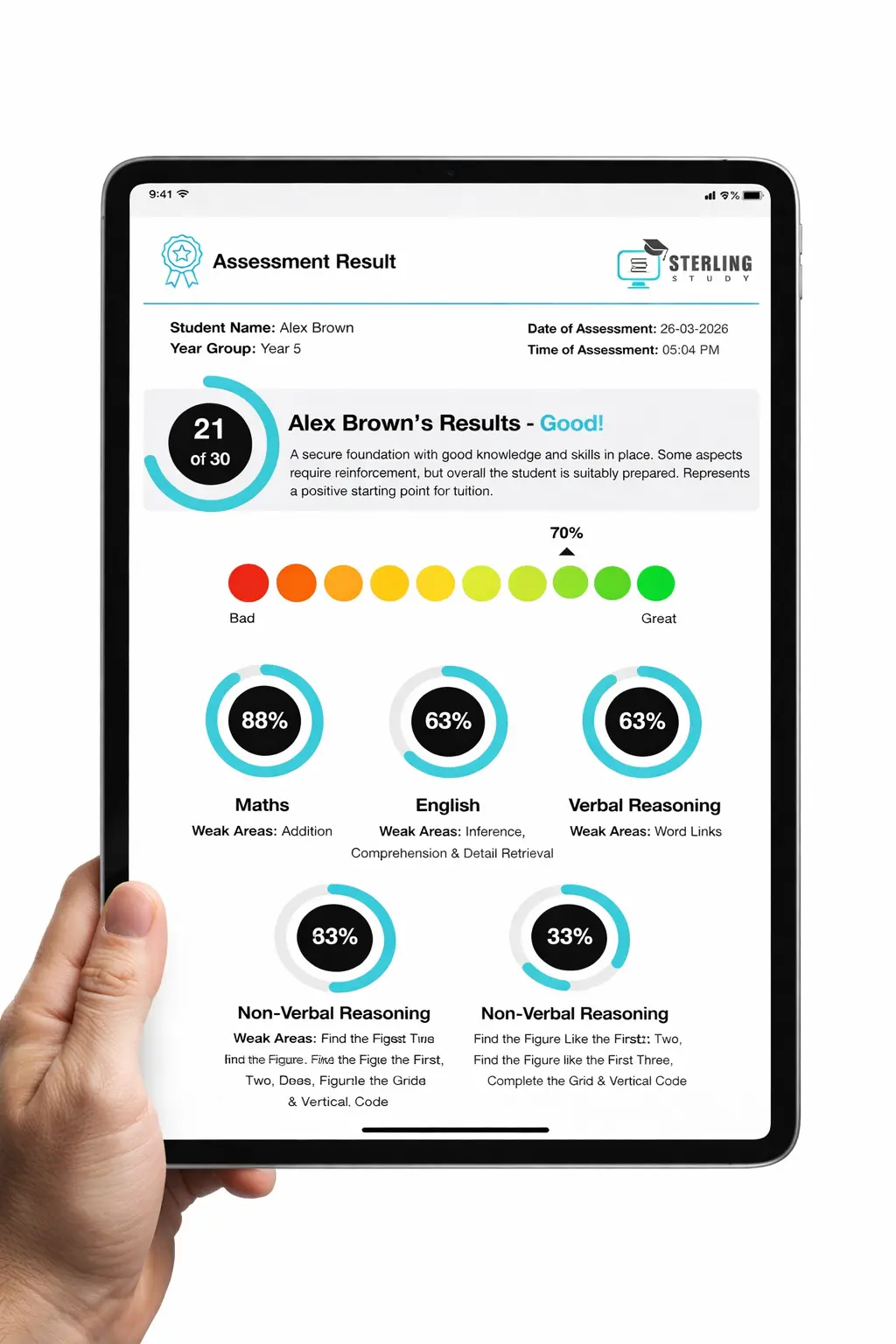
is the right call?
Find out first.
- ✓ Subject-by-subject breakdown
- ✓ Time-per-question analysis
- ✓ Where you stand vs typical grade boundaries
- ✓ Detailed PDF results sent immediately
- ✓ No strings attached
Where Can Your Grades Take You?
Once you know your UCAS points, the real question is what they're actually worth. This isn't a live matching tool, it's a grounded starting point built from real, sourced entry requirements across the different types of UK higher education, so you know what's genuinely on the table before you start researching individual courses.
The four types of UK higher education provider
Results-day guides often talk as if "university" is the only route into a degree. It isn't. UK higher education is officially organised into a few distinct provider types, and knowing which is which changes what you should actually be looking at.
Real examples of each type
| Provider | Type | Course example | Typical requirement |
|---|---|---|---|
| University of Manchester | University | BSc Computer Science | A*A*A inc. A* Mathematics |
| Coventry University | University | BA Business Management | BBB (120 points) |
| New College Durham | FE College with HE | Foundation degrees & HE programmes | Holds Foundation Degree Awarding Powers; accepts a flexible range of Level 3 qualifications, check the specific programme |
| Arts University Bournemouth | Specialist Institution | BA (Hons) Fashion | Portfolio, interview or audition-led rather than a fixed grade threshold |
BPP University and the University of Buckingham are examples of recognised private UK higher-education providers; check their own course pages directly for current entry requirements, as this isn't something we've sourced in detail here.
We haven't built a live matching tool here, because a tool that claims to search "all UK courses" without genuinely doing so would be more misleading than useful. What's above are real, sourced examples showing how the four provider types actually differ in practice. For your own subjects and grades, the Results Analyser above plus the official course pages linked throughout this guide are the most reliable next step.
Funding & Scholarships
Scholarship and bursary eligibility depends on far more than grades, fee status, nationality, income and subject all factor in, so we haven't tried to match individual students to specific scholarships here. What we can point you to are the genuine official sources:
- ✓UCAS — Scholarships, grants and bursaries, which explains how eligibility criteria vary by provider.
- ✓Each university's own course page (linked throughout this guide) typically has a "Fees and funding" section listing that specific course's current scholarships.
- ✓Discover Uni, the official government comparison site, for course-level funding information alongside entry requirements.
Why Your A Level Subjects Matter as Much as Your Grades
A student with AAB in Maths, Physics and Further Maths is in a genuinely different position from a student with AAB in English Literature, History and Sociology when applying for an Engineering degree, even though the grades and Tariff total are identical. Required and preferred subjects, GCSE requirements, admissions tests, interviews and portfolios all sit alongside the headline grade, and for subject-critical courses they often matter more than the total itself.
What Can I Do With My Grades?
Four common profiles, and how to think through each one. None of these numbers guarantee a specific course, always check your actual subjects against the real requirements on the university's own course page.
What Can I Do With AAB?
136 UCAS points. This profile meets the published requirement for a wide range of competitive courses, though the most selective offers, particularly Medicine, Dentistry and Oxbridge-level courses, may still specify particular subjects at particular grades. Check whether your specific subjects satisfy any named requirements, not just the overall total. If a course sits just out of reach, Clearing and contextual offers are both worth checking before assuming the door is closed.
What Can I Do With ABB?
128 UCAS points. ABB meets the published requirements for the large majority of UK degree courses, including plenty of Russell Group options depending on subject and course. As with any profile, a named subject requirement can still rule a specific course in or out regardless of the overall total, so check the course page directly rather than relying on the grade letters alone.
What Can I Do With BBB?
120 UCAS points. BBB opens a genuinely wide range of courses, and if it falls slightly short of an original offer, it's still often close enough that the university will confirm the place anyway, or that Clearing includes well-regarded alternatives at this level. Worth a direct call to the university before assuming the answer is no.
What Can I Do With BBC?
112 UCAS points. BBC still leaves real options open, particularly through Clearing, foundation years and courses with contextual offers. If a specific course needed more, weigh whether a focused single-subject resit is realistic against exploring an alternative course or route now, both are covered in more detail further down this page.
What If I Get Better Grades Than Expected?
If your results are stronger than your original offer required, your firm place is still confirmed as normal; better grades don't automatically change anything unless you act. It's worth weighing whether the original course and university are still the right fit, or whether it's worth exploring alternatives, including Clearing, which remains open to students who exceed expectations too. Any change is a decision to make deliberately, not a default, research the course, university, accommodation and career implications properly before abandoning a confirmed place.
What If I Miss My University Offer?
Missing a grade you needed is common, and rarely the full stop it feels like on the morning itself. Universities regularly accept students who've narrowly missed an offer, particularly where the rest of the application was strong, so the first move is always to check your actual status rather than assume the worst.
| Situation | Suggested next step |
|---|---|
| Missed by one grade | Check UCAS Hub, then contact the university directly; many still confirm the place |
| Missed by several grades | Check insurance choice, explore Clearing, consider alternative courses or a resit |
| Strong overall but one weak subject | Consider a single-subject resit rather than repeating everything |
| Course specifically requires a grade you missed | A resit may be worth considering, particularly for subject-critical courses like Medicine |
| Changed your mind about the course entirely | Explore Clearing or alternative pathways rather than forcing the original plan |
What happens if I miss my firm but meet my insurance?
Your insurance choice takes over automatically in most cases, check UCAS Hub to confirm it's shown as accepted. If you'd rather not take the insurance place, you can also decline it and go into Clearing instead, that's a genuine choice, not something you're locked into.
What happens if I miss both offers?
Neither place is automatically confirmed, and your UCAS Hub will usually show you're eligible for Clearing. This isn't a dead end, Clearing includes a genuinely wide range of courses and universities, some of which weren't in your original search.
A Level Results Day: what should I do next?
Clearing 2026: Everything You Need to Know
Clearing is UCAS's system for matching students to available university places once results are known, whether because an offer was missed, plans changed, an application was made late, or grades exceeded expectations. It opens on 2 July and runs until 19 October, but results day itself is the busiest single day.
How to Apply Through Clearing — Step by Step
Clearing: what to do in each situation
| Situation | What to do |
|---|---|
| Met firm | Confirm your place, no action needed |
| Missed firm, met insurance | Check insurance status in UCAS Hub |
| Missed both | Explore Clearing from 1pm |
| Exceeded offer | Consider alternatives carefully before acting |
| Changed your mind | Decline your place and explore Clearing |
| No offers held | Clearing may be an option; check eligibility in Hub |
| Applied after 30 June | You're automatically in Clearing |
Can I Use Clearing If I Got Better Grades Than Expected?
Yes. Clearing isn't only for students who missed an offer, you can decline a confirmed place and explore alternatives through Clearing if your results open up better options than your original choices.
What to have ready before you call
"Hello, I've received my A Level results today and I'm interested in your [course name]. My grades are [grades]. Could you tell me whether you have any Clearing places available and whether my results meet your current requirements?"
Questions to Ask a University During Clearing
- ✓Is the course definitely available right now, not just listed?
- ✓Do I meet the entry requirements with my actual results?
- ✓Does my specific subject combination meet any named requirements?
- ✓Would any offer be unconditional, and what happens if I accept it?
- ✓Is accommodation still available for this intake?
- ✓What are the exact course start dates?
- ✓Are there placement years or foundation-year options attached to this course?
- ✓Are there any additional requirements, interviews or admissions tests I'd still need to complete?
Can I Get My A Level Paper Reviewed or Remarked?
If a grade looks unusually low against your other results, speak to your subject teacher or exam officer as soon as possible, ideally on results day itself. There are three distinct post-results services, and it's worth knowing which one applies:
- ✓Clerical re‑check — confirms the marking and administrative process was completed correctly: all parts marked, marks added up correctly.
- ✓Review of marking — checks whether the mark scheme was applied correctly to your answers.
- ✓Priority review — the faster route where a university place depends directly on the outcome.
Deadlines and fees vary by exam board and by which service applies, so ask your exams officer which one is relevant to your qualification rather than assuming a single universal date.
It's worth being precise with the terminology too. A review of marking is the standard post-results service described above, checking whether the mark scheme was applied correctly. An appeal is a separate, formal process only available after a review of marking has been completed, used where a centre believes the review outcome itself was wrong, not simply as a second attempt at a better mark. Appeals are the exception, not the default next step.
Speak to your school or college before requesting a review. They can help you understand the mark, the grade boundary, and whether a review is genuinely appropriate for your situation, rather than a step to take on instinct alone.
Can I Retake My A Levels?
Yes. Most resits take place in the following summer's exam series, so if you sat A Levels in summer 2026, your next opportunity would normally be summer 2027. Students can typically resit individual subjects rather than the full set.
| Situation | Possible next step |
|---|---|
| Missed by one grade | Review of marking, Clearing, or a resit depending on how close and how important the course is |
| Missed by several grades | Clearing or an alternative route first; discuss a resit if the original path still matters |
| Strong grades except one subject | Consider a single-subject resit rather than a full year repeated |
| Course requires a specific grade you missed | Often worth considering, particularly for subject-critical courses like Medicine |
Should I Resit an A Level?
A resit gives you another opportunity to improve a specific subject grade, particularly where that grade matters for your intended course. Talk it through properly before ruling it out or committing to it under pressure on the day itself. If you're weighing up tutoring for a resit year, ask any provider directly about safeguarding rather than assuming it's covered: every tutor at Sterling Study is DBS-checked, and our safeguarding policy sits under the direct oversight of a named Safeguarding Officer, Company Director Ms Yesha Mukhtiar.
What Can I Do Instead of University?
Didn't Get Into University? You Still Have Options
Clearing
Makes sense when you still want to start a degree this year but your original plan hasn't worked out, whether that's a missed offer, a change of mind, or simply not having applied earlier. Covered in full detail above.
Foundation year
Makes sense when your grades sit below a course's direct-entry requirement but the subject is still right for you. Some universities offer a foundation-year route with different entry requirements than the direct-entry course, always check the individual course page rather than assuming every course has one.
Degree apprenticeship
Makes sense if you want a recognised qualification alongside paid work rather than full-time study. It's a genuine Results Day alternative, not a fallback, and worth researching properly rather than treating as a last resort.
Resitting A Levels
Makes sense when a specific grade is the actual barrier and you have a realistic, focused plan to close the gap, usually for one or two subjects rather than a full year repeated. Covered in more detail above.
Taking a gap year
Makes sense with an actual plan attached, work, volunteering, or a stronger reapplication, rather than as an open-ended pause. The difference between a useful gap year and a wasted one is almost always whether there's a specific goal behind it.
Employment or further study
Direct entry roles, structured schemes, and vocational or professional qualifications all exist outside the traditional degree route, and for some students turn out to be the better long-term fit.
A Level Results Day 2026: A Parent's Guide
Results day is stressful for parents too, and it's easy to say the wrong thing with the best intentions. UCAS's own advice for results day centres on preparing for different outcomes rather than fixating on one expected result, and that's the approach that tends to help most.
Before results day
Help your child prepare for more than one scenario, not just the one they're hoping for. Knowing the insurance offer and a couple of Clearing options in advance takes the pressure off having to think clearly for the first time on the morning itself.
When results arrive
Don't immediately assume a lower grade means university is no longer possible. Let your child read and process the result first, before anyone starts problem-solving out loud.
If the offer is confirmed
Let your child take in the news and understand the next steps themselves, rather than immediately moving into logistics.
If the offer is missed
Check insurance status first, then Clearing and the other options covered above, in that order, rather than jumping straight to worst-case planning.
If results are better than expected
Explore alternatives properly before changing course, not just because a different option suddenly looks available.
If your child is upset
Give them time before any major decision gets made. Calm and space in the first hour matters more than an immediate plan.
What to avoid
- ✓Comparing your child's results with a sibling's or a friend's
- ✓Pushing a major decision in the first five minutes
- ✓Assuming a missed offer automatically means university is off the table
- ✓Treating a single grade as a verdict on ability rather than one outcome on one morning
A Level Results Day 2026 Checklist
Before results day
- ✓Know your firm and insurance choices and the exact conditions of each offer
- ✓Check your UCAS Hub login and Personal ID work
- ✓Confirm how and when your school or college will release your results
- ✓Save the contact details for your firm and insurance universities
- ✓Make a shortlist of Clearing courses you'd genuinely consider, just in case
- ✓Bookmark UCAS Clearing search and your target universities' pages
- ✓Keep your phone charged and easily reachable
When you get your results
One thing worth repeating: don't make a decision based only on the overall grade profile. Check the exact subject and grade requirements of the course itself.
7 Things Not to Do on A Level Results Day
- ✓Don't panic after seeing one unexpected grade before checking the full picture.
- ✓Don't assume a missed offer automatically means university is over.
- ✓Don't choose a Clearing course purely because it appears available.
- ✓Don't look only at your overall UCAS points total.
- ✓Don't ignore subject-specific requirements buried in the small print of an offer.
- ✓Don't request a review of marking without understanding it can lower a grade too.
- ✓Don't make a rushed decision without contacting the university directly first.