Which A-Levels Should My Child Take? The 2026 University Entry Guide
Wrong A-Level choices quietly close university doors years before applications begin. This guide tells you exactly which subjects Russell Group universities want — with real entry data and the strategic combinations that work.
Not sure which subjects are right for your child? Book a free diagnostic — our team will map the right A-Level path for their university goals →
A-Level subject choices made at the end of Year 11 can quietly close university doors that will still be shut three years later — when your child is filling in a UCAS application and realising what they cannot apply for. Most families approach this decision with a single question. That question is not wrong. But it is not the only one that matters.
Fix them.
For free.
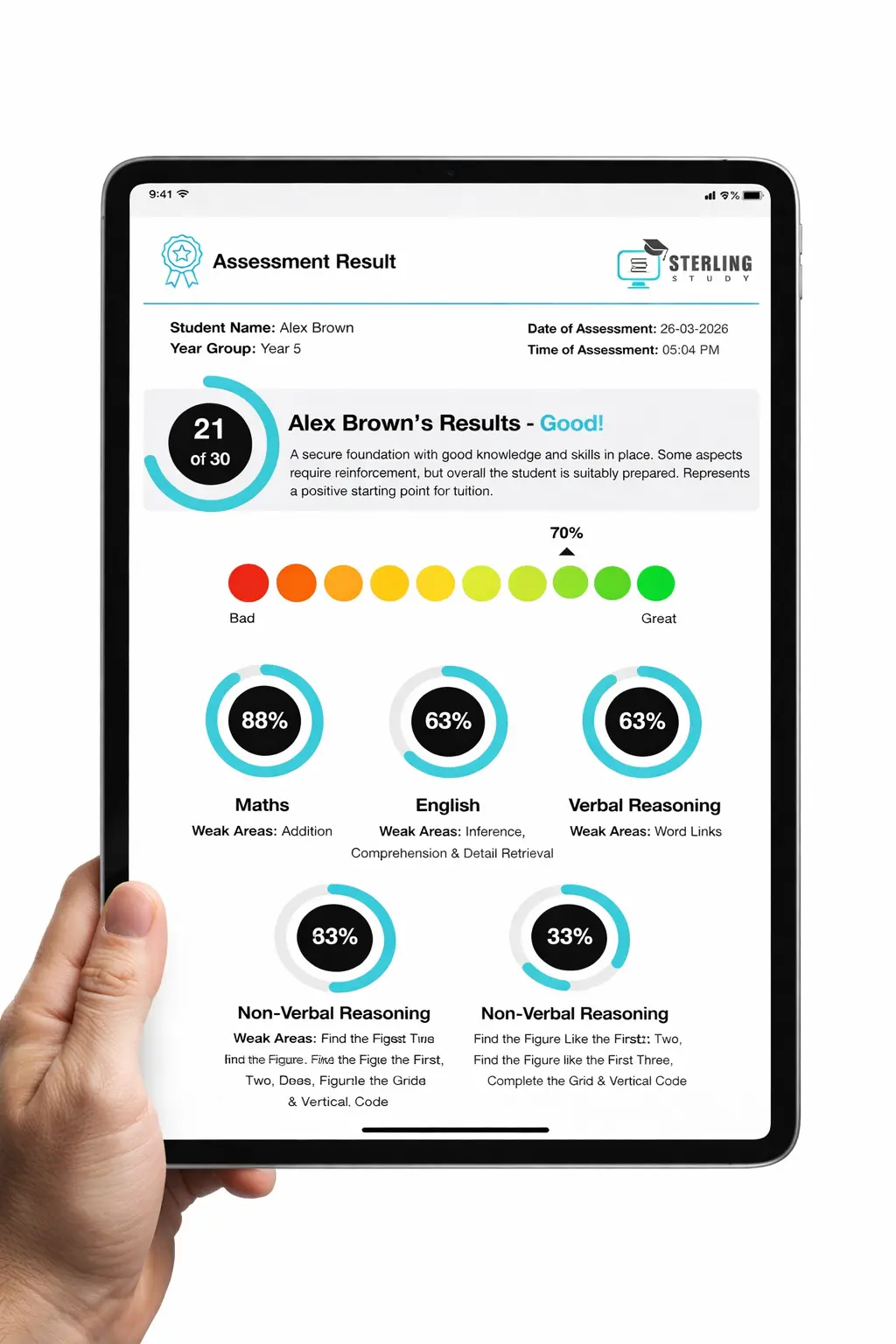
- ✓ Subject-by-subject breakdown across all Science topics
- ✓ Time-per-question analysis
- ✓ Where you stand vs grade boundaries
- ✓ Detailed PDF results sent immediately
- ✓ No strings attached
1. The Decision That Most Parents Don't Take Seriously Enough
Most families approach the A-Level decision with one question: 'What does my child enjoy?' That is a valid input. But treating it as the only input can lead to genuine, lasting regret.
The complete framework looks like this: choose subjects your child is genuinely passionate about and good at, that satisfy the requirements for their likely degree choices, and then perform exceptionally well in them. All three parts of that sentence matter equally.
Passion + genuine ability + degree alignment + exceptional grades. Miss any one of these and the strategy is incomplete. The best A-Level choice is one your child will still be glad they made at 21, not just at 16.
This is not about pressuring students into subjects they dislike. It is about making sure that enjoyment and ambition are given equal weight — and that the decision is made with full information rather than by default.
2. The Facilitating Subjects — What They Are and Why They Matter
The Russell Group publishes guidance on what they call 'facilitating subjects' — the A-Levels most commonly required or preferred across a wide range of degree courses. Students who take at least two facilitating subjects keep the widest range of university options open.
This does not mean every student must take five facilitating subjects. It means that students who choose subjects outside this list entirely — without a strong degree-specific reason — are narrowing their options before they have fully decided what they want.
3. The Specific Requirements That Matter — By Degree
The table below reflects actual entry requirements and preferences at Russell Group universities as of 2026. It is not exhaustive — always verify with individual institutions — but it captures the patterns that matter most.
| Degree | Effectively Required | Strongly Preferred | Notes |
|---|---|---|---|
| Medicine / Dentistry | Chemistry | Biology + Maths or Physics | Without Chemistry, this path is essentially closed |
| Engineering (Mech/Civil) | Maths + Physics | Further Maths at top unis | Standard requirement virtually universally |
| Engineering (Chemical) | Chemistry + Maths | Physics or Biology | Check specific university requirements |
| Computer Science | Mathematics | Further Maths (Imperial, UCL, Cambridge) | Not required but strongly preferred at top unis |
| Economics (Russell Group) | Mathematics | Further Maths advantageous | Some courses now effectively require it |
| Law | No fixed requirement | English Lit, History, Politics | Strong GCSEs as important as A-Level subject |
| Medicine at Oxbridge | Chemistry + Biology + Maths | Exceptional GCSE profile | Plus UCAT/BMAT score required |
Chemistry is effectively non-negotiable at 95%+ of UK medical schools. A student who drops Chemistry in Year 12 has, in almost all cases, closed that door permanently. This decision cannot be reversed mid-course.
4. The 'Easy A-Levels' Myth
Every year, some students choose A-Levels based primarily on perceived difficulty. This is a rational short-term strategy and a long-term mistake.
Universities — particularly selective ones — are aware of the perceived hierarchy among A-Level subjects. Admissions processes do not treat all A-Level grades as identical. A student with AAA in subjects widely perceived as less academically rigorous is, in many cases, considered a less competitive applicant than a student with ABB in Mathematics, Chemistry, and English.
The right strategy: choose subjects your child is genuinely passionate about and performs well in, that open the right doors — and then get expert support to achieve the strongest possible grades in them.