SATs Revision at Home: What Actually Moves the Score in 2026
Most SATs revision advice is "do more practice papers." Here is what our KS2 specialists actually recommend — specific activities, timing, and the one thing parents should stop doing immediately.
Not sure where your child's gaps are? Book a free KS2 diagnostic — our specialist team will find exactly what is holding them back →
Resistance to SATs revision at home is almost always a signal about the method, not the child. Hours of practice papers and coloured highlighters feel productive — but if your child is dreading every session, the approach needs to change before the effort does.
Fix them.
For free.
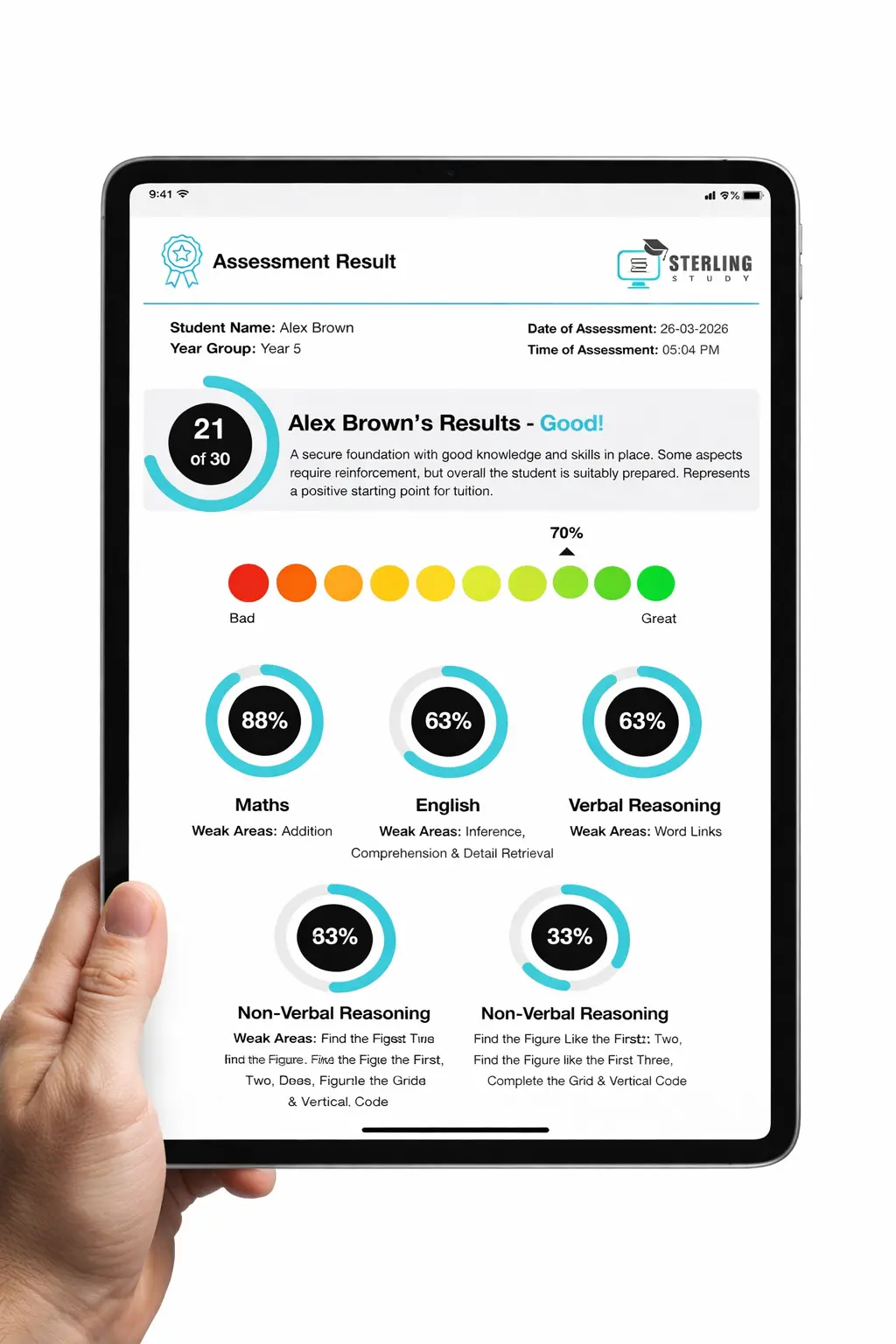
- ✓ Subject-by-subject breakdown across all Science topics
- ✓ Time-per-question analysis
- ✓ Where you stand vs grade boundaries
- ✓ Detailed PDF results sent immediately
- ✓ No strings attached
1. The Schedule That Looks Perfect and Doesn't Work
Fatima set up the most organised SATs revision schedule I had ever seen. A spreadsheet. Colour-coded. Every evening accounted for from January to May. By February, her daughter had stopped doing any of it.
Resistance to SATs revision at home is almost always a signal about the method, not the child. A rigid, ambitious schedule creates pressure — and pressure at primary school age tends to produce avoidance, not effort.
When a child pushes back against revision, the instinct is to push harder. In most cases the right response is the opposite: reduce the length of each session and increase the variety within it. Ten minutes of engaging, mixed practice beats an hour of staring at a workbook.
2. The 20-Minute Rule
Twenty minutes of focused, varied preparation every evening outperforms 90 minutes of unfocused paper grinding. Consistent, short, focused sessions build knowledge more effectively. They are also sustainable across five months — which paper marathons are not.
The key word is varied. A 20-minute session works best when it alternates between three different tasks:
3. For Maths: What Actually Moves Scores
Not all Maths revision is equal. The activities below are ranked by their impact on actual SATs scores — not by how much time most families spend on them.
| Activity | What it builds | Frequency |
|---|---|---|
| Daily times tables & division facts drill (5 mins) | The automaticity Paper 1 (arithmetic) requires | Every day |
| Fraction arithmetic (add, subtract, multiply, divide) | Highest-frequency Paper 1 topic — often 3+ questions | 3× per week |
| Mental percentage problems | High exam frequency; automatic recall gives time advantage | 3× per week |
| Multi-step word problems | Reasoning Papers 2 & 3 preparation — parsing problems into maths steps | 2× per week |
| Times table games (apps, competitions) | Makes automaticity practice enjoyable and sustainable | When motivation dips |
4. For SPAG: The Section Parents Most Often Neglect
Many families focus SATs preparation almost entirely on Maths. The Reading and SPAG papers together carry as many marks — and SPAG is the most neglected component of home revision.
Fronted adverbials. Subjunctive mood. Modal verbs. Parenthesis. Relative clauses. Children who write grammatically but do not know these terms by name will lose marks on questions they should be able to answer.
The KS2 SPAG terminology list is published by the government. Working through it systematically — one term per day — over 8 to 10 weeks is the single highest-impact SPAG preparation activity available to families revising at home.
5. The One Thing Parents Should Stop Immediately
Discussing your own SATs anxiety in front of your child.
This is not a judgment — it is almost impossible not to do, because parents are human and the exam feels high-stakes. But children are exquisitely tuned to parental emotional state. Research on test anxiety in primary school children consistently identifies parental anxiety as one of the strongest predictors of child test anxiety.
SATs are one snapshot at one point in time. They do not determine secondary school admissions. A below-expected-standard score is not a verdict on your child's potential — it is data about where to focus next.
“I was more stressed than my son was. Once I genuinely understood that SATs do not affect secondary school admissions, I relaxed. He did too. He scored 108 in Maths.”— Sarah T., Sterling Study parent