KS2 SATs 2026: Everything Parents Actually Need to Know (Without the Fluff)
What SATs test, how they're marked, what scaled scores mean, and what parents should actually do. The straightforward guide — written by a KS2 specialist who sees both sides every year.
Not sure where your child's gaps are? Book a free SATs diagnostic — our specialist team will find exactly what needs work before May →
Every January, parents start messaging us. The most common first sentence is: "I don't really understand what SATs are — and I'm worried I'm not doing enough to help." This guide gives you the honest picture, without the anxiety-inducing language you'll find elsewhere online.
1. What SATs Actually Are (And Aren't)
SATs are national standardised tests taken in May of Year 6. They are externally set and externally marked — your child's school has no influence over the process. The results serve two main purposes: measuring school performance nationally, and informing secondary school Year 7 setting. That's it.
- National standardised tests in May, Year 6
- Externally set and marked
- Used to measure school performance nationally
- Used to inform Year 7 setting at secondary school
- Secondary school admissions tests
- A formal qualification
- A verdict on your child's intelligence or potential
- Something that follows your child beyond transition
SATs results do not affect which secondary school your child attends. Admissions are based on catchment area, faith criteria, or — for selective schools — separate admissions tests. SATs play no role in that process whatsoever.
2. The Papers — What Your Child Will Actually Sit
KS2 SATs 2026 take place across three days in May. Here is the full paper schedule, including what each paper tests and how long each one lasts.
Fix them.
For free.
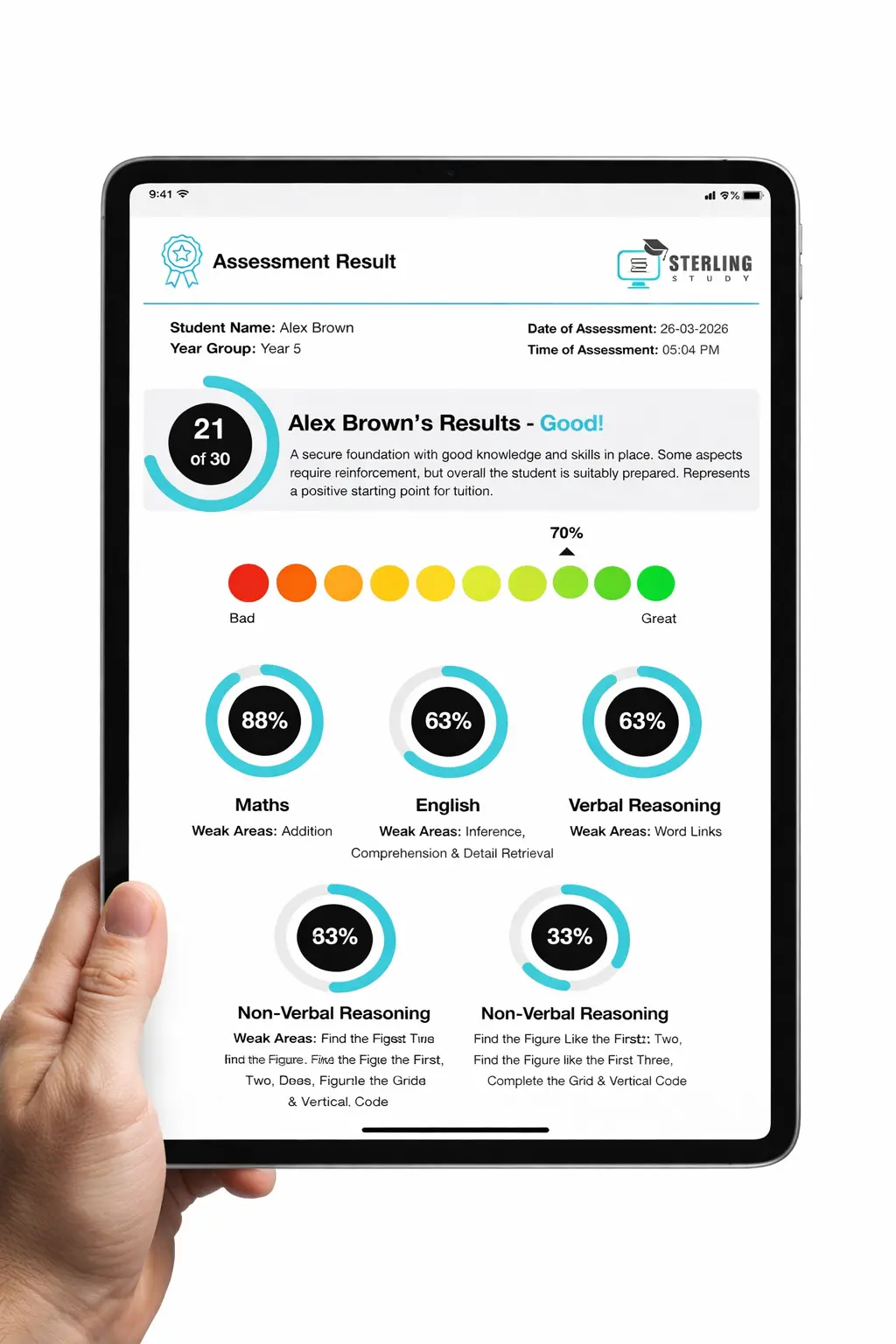
- ✓ Subject-by-subject breakdown across all Science topics
- ✓ Time-per-question analysis
- ✓ Where you stand vs grade boundaries
- ✓ Detailed PDF results sent immediately
- ✓ No strings attached
3. The Scaled Score System — Explained Simply
SATs results are not reported as raw marks — they are converted to a scaled score between 80 and 120. This system allows fair year-on-year comparison even when papers differ slightly in difficulty. The raw mark needed to reach a scaled score of 100 changes each year — the Standards and Testing Agency calibrates it based on the national cohort's performance on that year's papers. This is why there is no fixed pass mark in terms of questions answered correctly.
| Scaled Score | What It Means | Suggested Action |
|---|---|---|
| 80–99 | Working below the expected standard | Targeted support in summer before Year 7 |
| 100 | Meeting the expected standard | National benchmark — solid performance |
| 101–109 | Meeting the expected standard — above average | Strong performance, comfortable transition |
| 110–120 | Working at the higher standard | Excellent performance across all tested areas |
The raw mark needed to reach a scaled score of 100 is recalculated every year after the papers are sat. A harder paper that year means fewer correct answers are needed to reach the benchmark. The system is designed to be fair across different cohorts — not to produce a fixed cut-off score.
4. How SATs Results Are Used
This is the section most parents actually need — and the one most summary guides skip over. Here is exactly what happens to your child's results after the papers are marked.
| How results are used | Details |
|---|---|
| School accountability data | Published nationally — shows the percentage of pupils meeting expected standard at each school. Used by Ofsted and the Department for Education. |
| Secondary school Year 7 setting | Results are sent to the receiving secondary school and used as one factor in initial set decisions for Maths and English. Most schools also run their own baseline assessments in September. |
| Year 7 catch-up support | Students who score below the expected standard may receive targeted Year 7 literacy and numeracy support. This is government-funded and delivered in school. |
| NOT used for | Secondary school admissions. SATs results have no impact whatsoever on which secondary school your child attends. |
Initial set placements are one data point, not a life sentence. Most secondary schools review sets after the first term based on classwork and internal assessments. A strong start in Year 7 — regardless of SATs score — goes a long way. Our job is to make sure your child arrives in September with momentum, not anxiety.