The PhD Method: How to Actually Revise Science Without Burning Out | Sterling StudyThe PhD Method: How to Actually Revise Science Without Burning Out | Sterling StudyThe PhD Method: How to Actually Revise Science Without Burning Out | Sterling StudyThe PhD Method: How to Actually Revise Science Without Burning Out | Sterling StudyThe PhD Method: How to Actually Revise Science Without Burning Out | Sterling Study
The PhD Method: How to Actually Revise Science Without Burning Out
Most GCSE revision is a waste of time. Our system - designed and led by PhD Scientists from UCL and Imperial - shows you how to hack your brain's chemistry so facts actually stick, and how to tackle 6-mark questions with confidence.
Most GCSE and KS3 revision is a total waste of time. Hours of highlighting textbooks until they look like a neon crime scene, or re-reading the same page on Cell Biology four times while your mind wanders to what's for dinner. The problem is not that you are not working hard - it is that you are practising passive learning. Your brain is essentially on autopilot.
✓ FREE · 30 mins · No Obligation
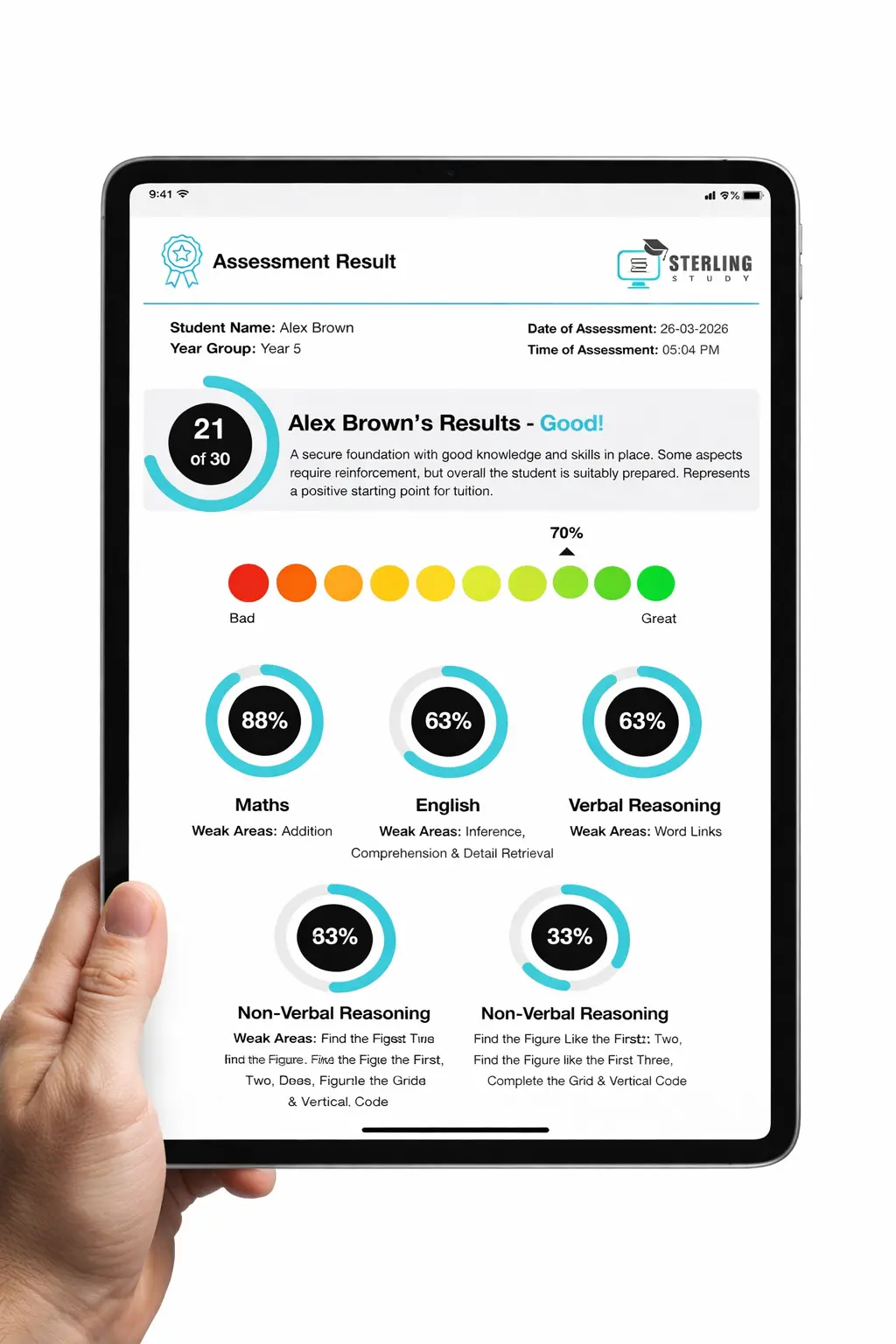
Find your gaps. Fix them. For free.
Not sure where the gaps in your knowledge are? Our PhD-led team uses a diagnostic assessment to find exactly what is holding you back before you even start.
✓ Subject-by-subject breakdown across all Science topics
Effective revision is supposed to feel a bit difficult. If it feels easy and smooth, you are probably not learning anything. The brain does not form strong memories when it is comfortable - it forms them when it is being challenged.
The Sterling secret sauce: Active Recall
Instead of reading about an atom, you close the book, grab a blank sheet of paper, and try to draw it from scratch. It feels messy. You will forget things. You will get frustrated. But that frustration is literally the sound of your brain building a new memory.
Because our lead tutors are PhD Scientists from UCL and Imperial who designed the system from scratch, we look at revision through a different lens. We do not just want students to memorise facts - we want them to understand how to make those facts stick. The four techniques below are what every session is built around.
01
Active Recall
Close the book. Write it from memory. The struggle is the learning.
02
Spaced Repetition
Revisit topics at increasing intervals - not all in one night before the exam.
03
Layering
Build understanding in layers - core idea first, then detail, then application.
04
Timed Practice
Exam conditions every week. By the time GCSEs arrive, it feels familiar.
Highlighting, re-reading and copying notes are three of the least effective revision techniques according to decades of cognitive science research. They feel productive because they require almost no mental effort - but that is exactly why they do not work. If it feels too easy, it probably is.
2. The Sterling Way (Watch)
We do not just talk about it - we show you. Below is a quick masterclass on how to tackle the hardest part of any Science paper: the dreaded 6-mark questions and those tricky Required Practicals.
Pro tip: Watch for the Layering technique
In the video, watch how we use Layering. We do not dump information - we build it up in stages so it makes sense in an exam hall, not just in a quiet classroom at home.
3. Why Online Works Better
Sterling Study is a 100% digital-first platform. Not because it is cheaper or easier to run - but because it genuinely produces better results. You should not have to waste an hour in traffic to access a top-tier tutor.
📊
The Parent Portal
No more wondering how it is going. Parents get a live dashboard showing test scores, session notes and progress week by week.
📄
Monthly Testing
Formal digital exams every month. By the time the real GCSEs arrive, students have already sat the same format 20 times. Nerves disappear fast.
👥
Small Groups Only
Maximum 6 students per class. You cannot hide at the back here - our tutors are on you the second you look confused.
We also use high-end digital simulations for Science practicals - where every student gets to be the lead scientist rather than standing at the back of a group of thirty watching a teacher do it. Usually better than a school lab, not worse.
Sterling Study GCSE results - 90% of students achieve Grade 6 and above
90%
Grade 6+
Achieved in Maths, English and Science
3 in 4
2+ Grades Up
Students improve by 2+ grades within a year of joining
PhD Sci.
System designed and led by PhD Scientists from UCL and Imperial
NO
Contracts
Stay because of results, not paperwork
Frequently Asked Questions
I am doing Combined Science, not Triple. Is this for me?+
Definitely. Whether you are aiming for a 5-5 or a 9-9, the core concepts are the same. We tailor the Higher Tier content specifically for students pushing for the top grades, and our tutors know exactly which topics carry the most marks in each exam board.
How can you teach Science practicals through a screen?+
Usually better than a school lab. We use high-end digital simulations where every student gets to be the lead scientist, rather than standing at the back of a group of thirty watching a teacher do it. Students develop genuine procedural understanding rather than just copying what they see.
What if I do not get on with my tutor or do not feel like I am improving?+
We do not do trap contracts. Life is busy enough. If you do not feel like you are improving, you can walk away any time with no notice period. We keep our students because of our results, not a legal document.
Which exam boards do you cover?+
We cover AQA, Edexcel and OCR across Biology, Chemistry and Physics for both GCSE and KS3. Our tutors are exam-board specialists and know exactly how marks are awarded in each specification.
When is the right time to start?+
The honest answer is: earlier than you think. Students who start in Year 9 or early Year 10 have time to build real understanding from scratch. Students who start in Year 11 can still make dramatic improvements - but the work is more intensive and the window is shorter. Either way, the first step is a free diagnostic so we know exactly where to focus.
What Our Students Say
★★★★★ 4.9/5 on Google Reviews
★★★★★
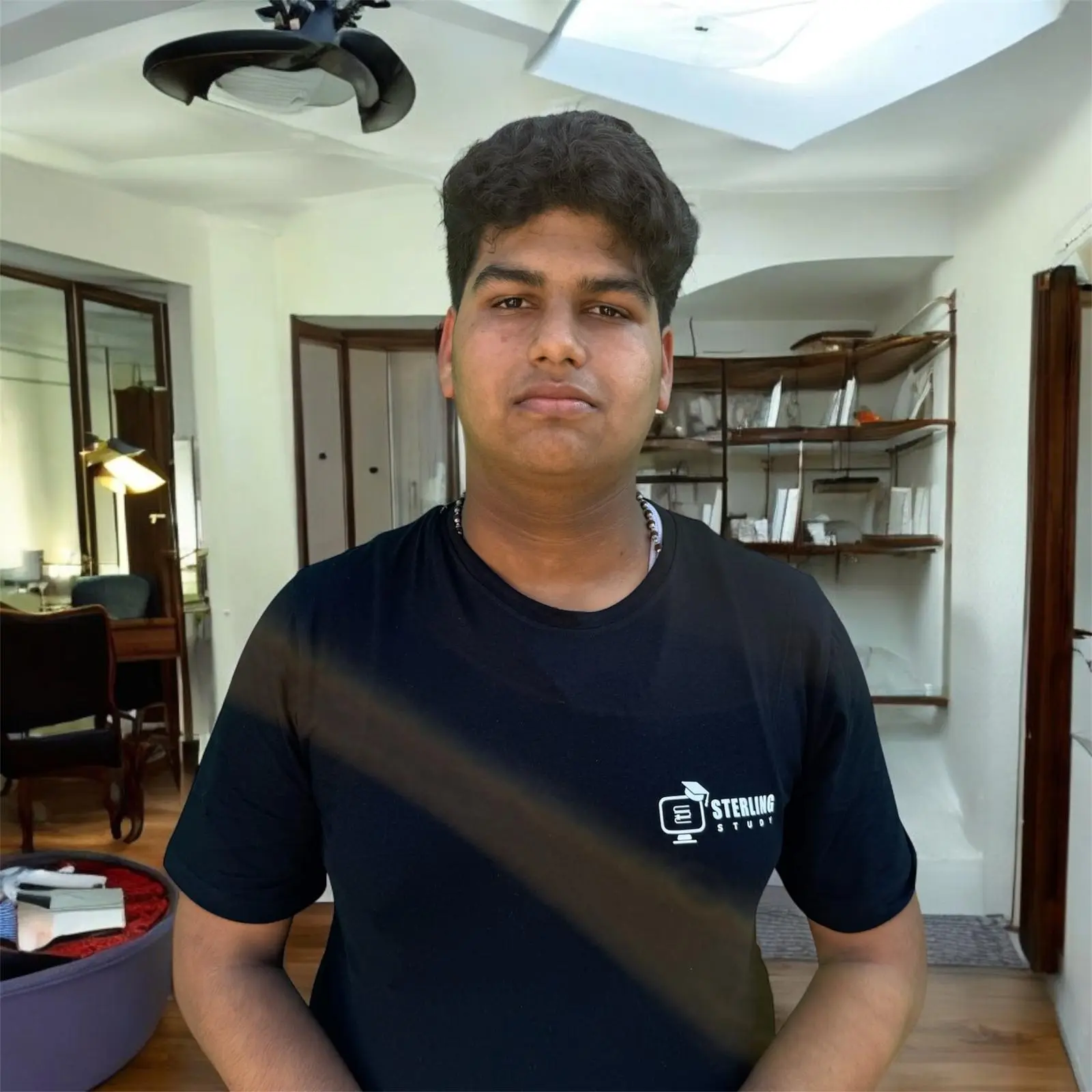
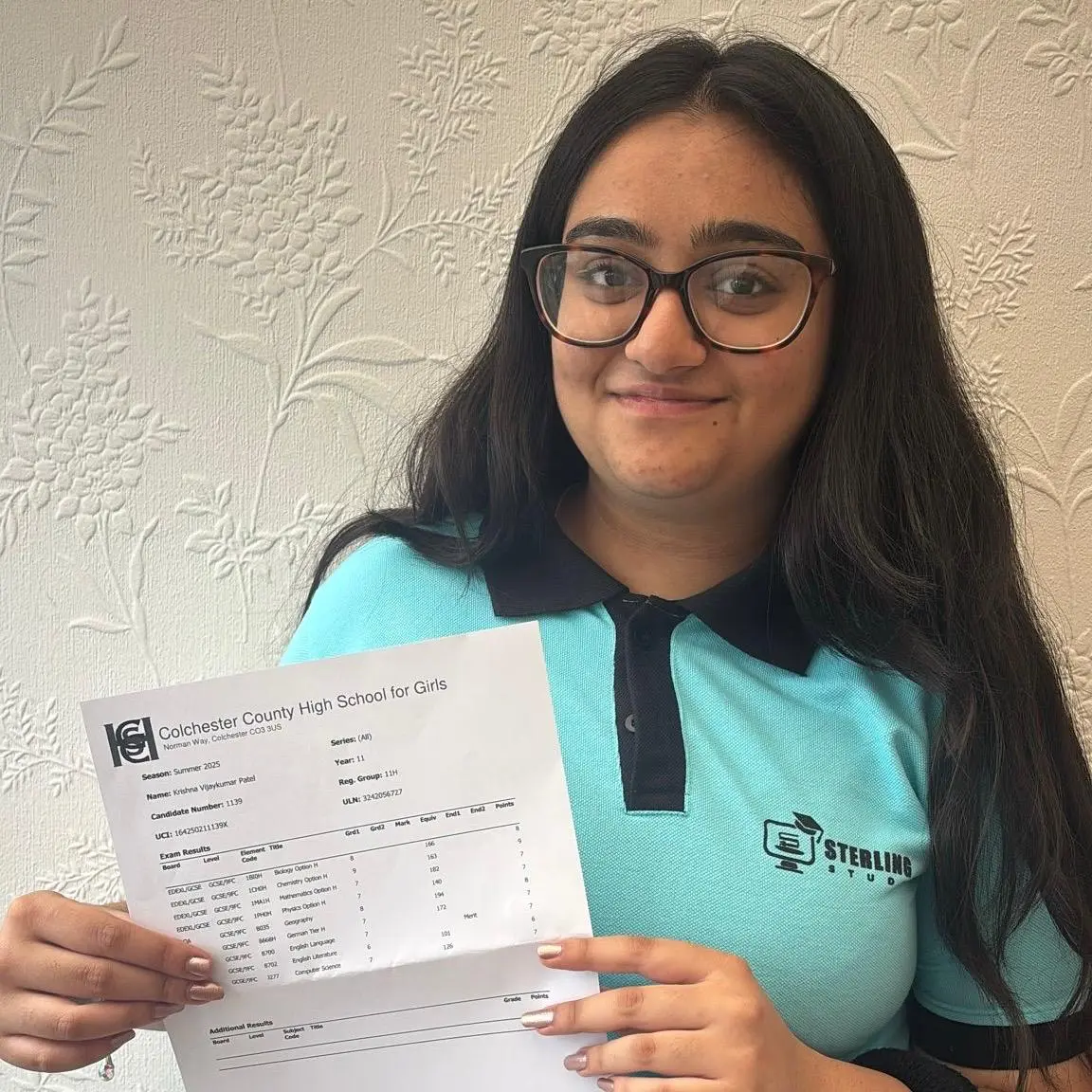
“I moved to the UK and was really struggling to keep up in science. My working grade was a 4 in Year 9. By the end of Year 10, I had an 8. The monthly tests kept me on track and the tutors actually noticed when I was falling behind.”
★★★★★
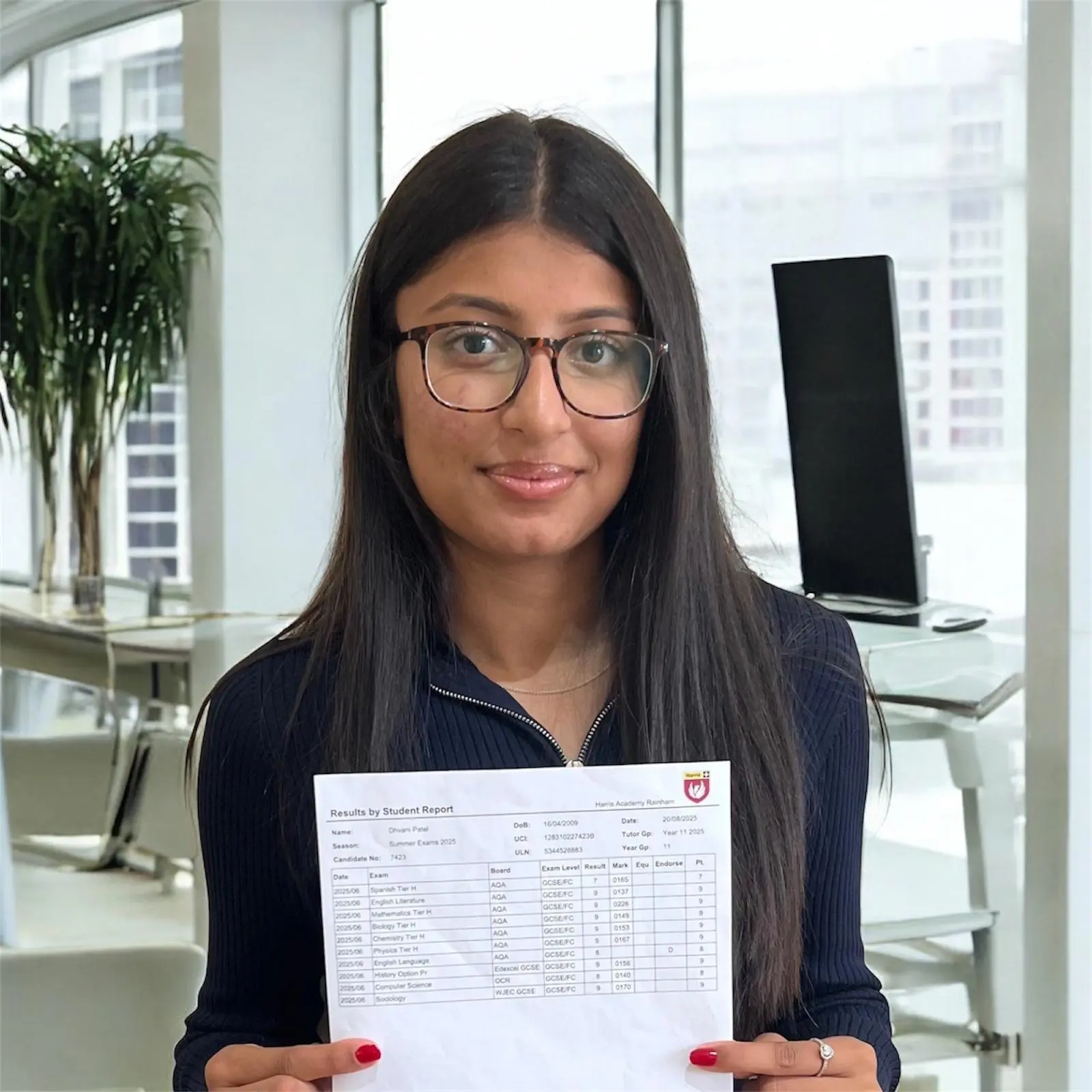
“I was aiming for 7s but ended up with grade 9s across all my GCSEs including Maths, English and all three Sciences. What made the difference was how structured the sessions were. Every class felt purposeful, not just going through the motions.”
★★★★★
“Chemistry was the subject I dreaded most going into Year 11. Sterling broke it down in a way school never quite managed. I walked out of my chemistry exam feeling confident for the first time and got a 8 in the end.”
★★★★★
“I moved to the UK and was really struggling to keep up in science. My working grade was a 4 in Year 9. By the end of Year 10, I had an 8. The monthly tests kept me on track and the tutors actually noticed when I was falling behind.”
★★★★★
“I was aiming for 7s but ended up with grade 9s across all my GCSEs including Maths, English and all three Sciences. What made the difference was how structured the sessions were. Every class felt purposeful, not just going through the motions.”
★★★★★
“Chemistry was the subject I dreaded most going into Year 11. Sterling broke it down in a way school never quite managed. I walked out of my chemistry exam feeling confident for the first time and got a 8 in the end.”
 GCSE Science
 GCSE Science
 GCSE Science