GCSE Science Required Practicals: The 15-Mark Opportunity Most Students Ignore (2026)
Required practicals appear in every GCSE Science exam paper. They're almost entirely predictable. Most students leave these marks on the table. Here's the exact list, question patterns, and 4-step revision method.
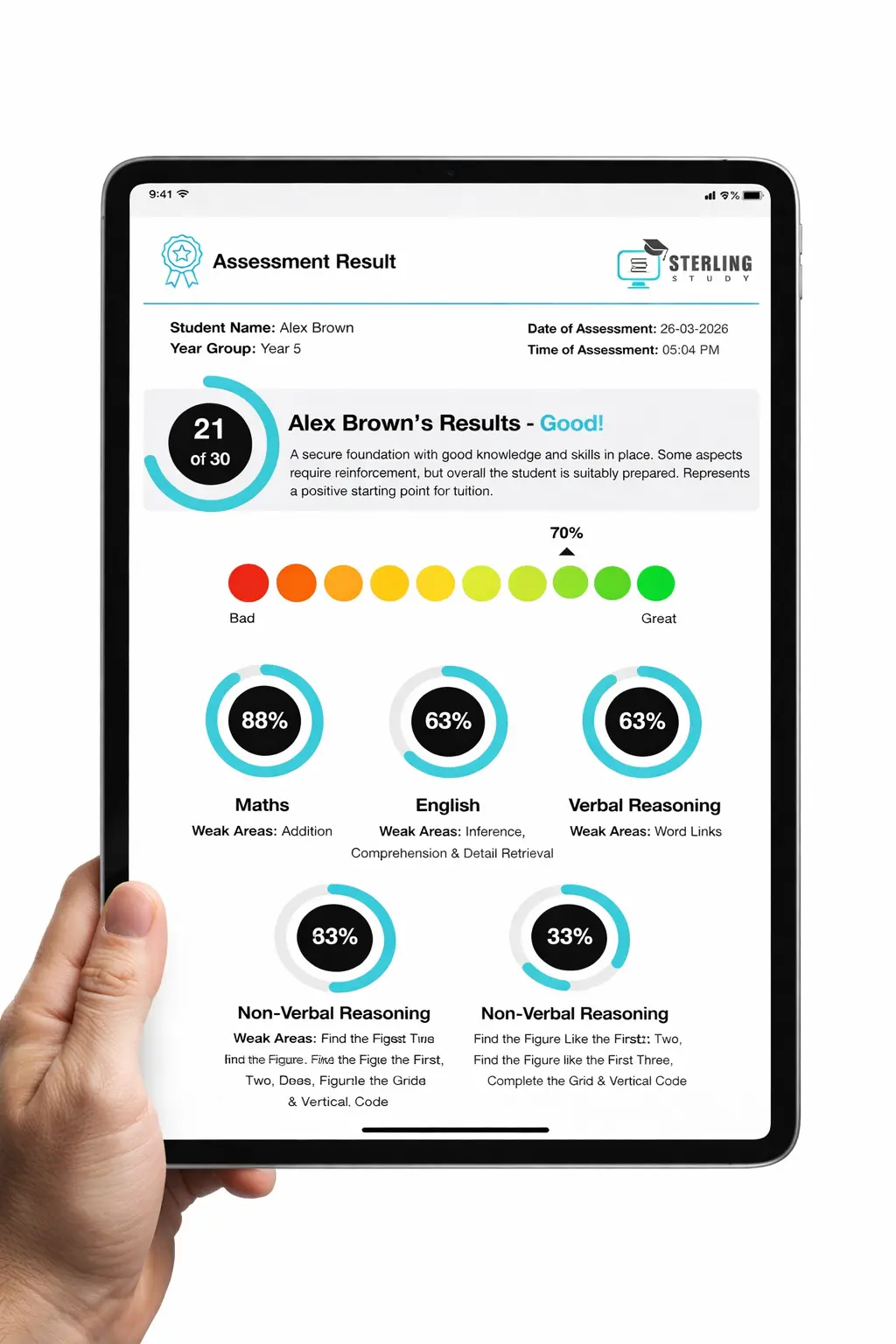
Not sure where your practical gaps are? Book a free Science diagnostic — our PhD Scientist-led team will find exactly what's holding you back →
Every year, GCSE Science students leave marks on the table. Not because they do not know the content. Not because they did not work hard. Because they did not revise the required practicals. These questions are almost entirely predictable — and yet most students treat them as an afterthought.
Fix them.
For free.
- ✓ Subject-by-subject breakdown across all Science topics
- ✓ Time-per-question analysis
- ✓ Where you stand vs grade boundaries
- ✓ Detailed PDF results sent immediately
- ✓ No strings attached
1. The Marks Most Students Leave on the Table
Required practical questions appear in every AQA, Edexcel, and OCR GCSE Science paper. They account for approximately 15–20% of available marks. And — crucially — the full list of practicals is published in the specification. The question patterns are almost entirely predictable.
The full list of required practicals is published in every exam board's specification. You can find the questions before you sit the exam. Yet most students treat them as an afterthought — often revising them the night before, if at all.
The return on investment here is extraordinary. A student who spends 24 hours of targeted, structured revision on the eight highest-frequency practicals can expect to pick up marks that many of their peers will simply leave on the table. These are not obscure corner cases — they are among the most predictable questions in the entire paper.
2. The Most Frequently Examined Practicals (AQA Analysis)
Based on analysis of six years of AQA GCSE Combined Science papers, these eight practicals account for the vast majority of required practical marks. A student who can confidently answer questions on all eight is very well placed.
| Required Practical | Subject | Exam Frequency (last 6 series) |
|---|---|---|
| IV characteristics of electrical components | Physics | 6/6 ✅ |
| Specific heat capacity investigation | Physics | 5/6 |
| Osmosis in plant tissue | Biology | 5/6 |
| Acid-base neutralisation titration | Chemistry | 5/6 |
| Effect of light on photosynthesis rate | Biology | 4/6 |
| Enzyme action — effect of temperature/pH | Biology | 4/6 |
| Chromatography / Rf value calculations | Chemistry | 4/6 |
| Investigating wave speed | Physics | 3/6 |
These eight practicals together account for the vast majority of required practical marks. Prioritise them in your revision schedule and work through the past paper questions for each one systematically.
3. What Exam Questions Actually Ask
Required practical questions are not random. They follow five recurring patterns. Once you recognise these patterns, you stop being surprised by any practical question — you just know which type it is and what the examiner wants.
| Question Pattern | What It's Really Testing | Marks Typically Available |
|---|---|---|
| 'Describe how you would carry out this experiment' | Method knowledge: steps, equipment, controls | 4–6 marks |
| 'Identify the anomalous result in this table' | Data evaluation: pattern recognition | 1–2 marks |
| 'Explain why this variable was controlled' | Experimental design understanding | 2–3 marks |
| 'Calculate the Rf value / rate / efficiency' | Quantitative application of practical knowledge | 2–3 marks |
| 'Suggest an improvement to reduce error' | Critical evaluation skills | 2–3 marks |
Notice that none of these patterns require you to have physically performed the experiment. They require you to understand it — the method, the variables, the data, and the evaluation. Every one of these can be revised from a summary card and a set of past paper questions.
4. The 4-Step Required Practical Revision Method
This is the exact method we use at Sterling Study with every GCSE Science student. Each step builds on the last. Work through each of the eight practicals using this framework and you will not be caught out.
Approximately 3 hours per practical. For the eight highest-frequency practicals: 24 hours of targeted work spread across 8–10 weeks. The return on that time is disproportionately high compared to almost any other revision activity available.
My son had completely ignored the practicals in his revision. Three weeks before his exams we went through the top eight systematically. On the actual paper he said he knew the answer to every single practical question immediately. He went from Grade 5 to Grade 7.