Why Learning to Code Could Be the Best Investment in Your Child's Education (2026)
Not because they'll become a programmer. Because coding develops specific cognitive skills that every employer, university, and career path will value more every year. A PhD neuroscientist explains why.
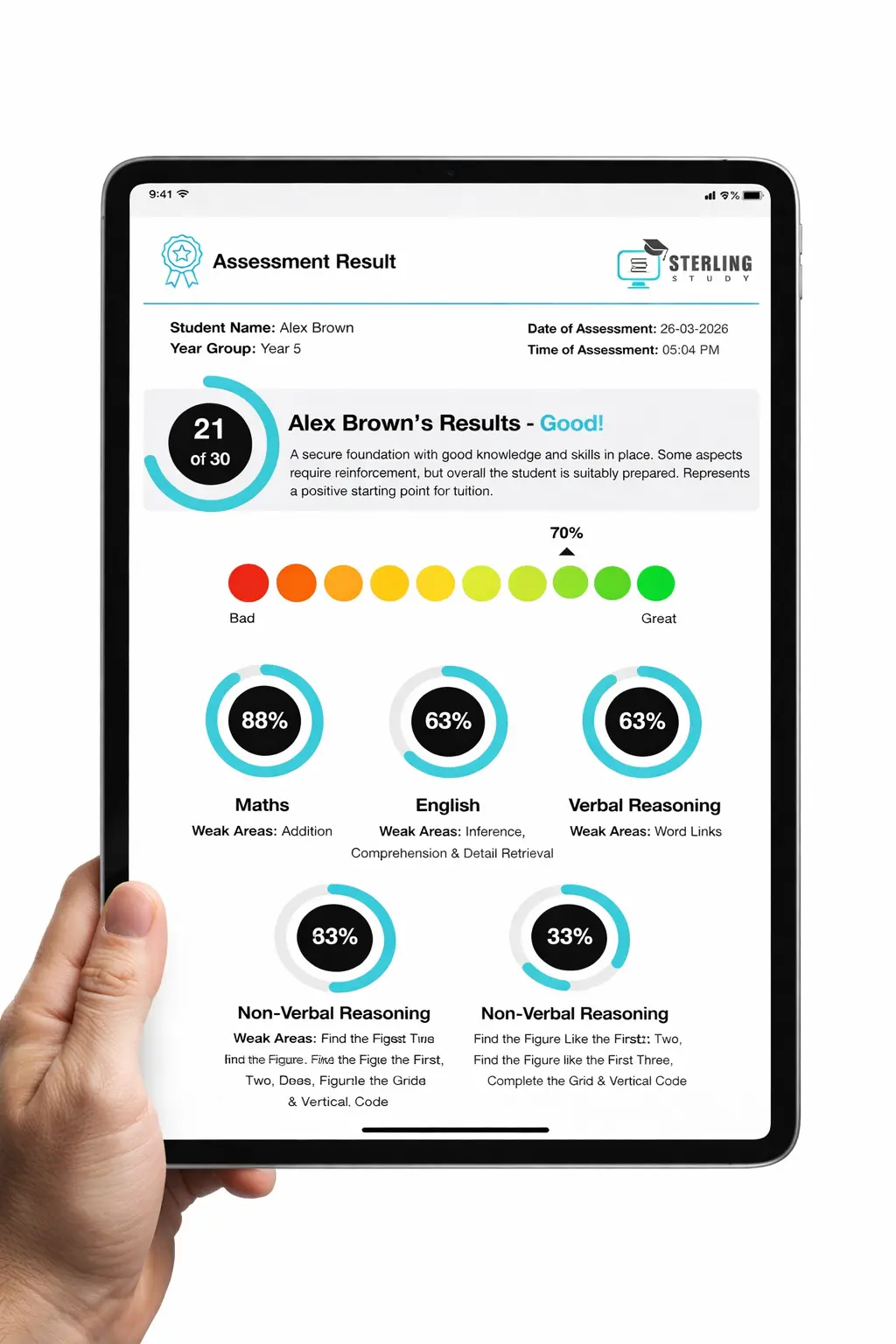
Not sure where your child's gaps are? Book a free diagnostic - our PhD-led team will find exactly what's holding them back →
Most parents assume coding is for future programmers. It is not. Coding is one of the most effective environments ever created for building the cognitive skills that high-performing people use — in every field, not just technology. Here is why a PhD neuroscientist says it belongs in every child's education plan.
Fix them.
For free.
- ✓ Subject-by-subject breakdown across all Science topics
- ✓ Time-per-question analysis
- ✓ Where you stand vs grade boundaries
- ✓ Detailed PDF results sent immediately
- ✓ No strings attached
1. The Answer Nobody Expects from Someone Who Runs a Coding Programme
When parents ask me why their child should learn to code, I do not say "because tech jobs pay well" or "because AI is coming."
I say: because coding is one of the most effective environments ever created for developing the specific cognitive skills that high-performing people use — in every field, not just technology.
The habits of mind that coding builds — decomposition, debugging, abstraction, precision — are the same habits of mind that top lawyers, surgeons, scientists, and entrepreneurs use every single day. Coding just happens to be the fastest and most engaging way to build them.
2. What Coding Actually Trains the Brain to Do
Each of these four cognitive skills is developed naturally and repeatedly through coding practice — and each transfers directly to academic and professional performance far beyond the screen.
| Cognitive Skill | How Coding Develops It | Why It Matters Beyond Programming |
|---|---|---|
| Decomposition | Every programme: break the big problem into smaller solvable steps | Essay planning. Project management. Surgery. Law. Universal. |
| Debugging | Encounter what is not working. Form a hypothesis. Test it. Iterate. | This is scientific thinking. How the best professionals in every field approach difficulty. |
| Abstraction | Identify what is essential vs what is noise in a complex system | One of the highest-value cognitive skills in academic and professional contexts. |
| Precision | Code must be exact. One wrong character breaks it. | Builds habits of precision in language and thinking that transfer to all subjects. |
3. The Specific Academic Advantages
The cognitive skills coding builds do not stay inside the coding classroom. Our cohort data shows measurable grade improvements across every subject where logical thinking, precision, and systematic problem-solving play a role.
Logical sequencing maps directly onto algebraic problem-solving. Variable manipulation in code mirrors equation work in mathematics.
+0.8 grades on average Students who code regularly score on average 0.8 grades higher in GCSE Maths (Sterling Study cohort data)
Students with 12+ months Python experience score on average 1.8 grades higher than those without (our data). The programming component becomes a strength, not a worry.
+1.8 grades on average
Experimental design, data analysis, and systematic problem-solving are all skills coding develops as second nature — giving coders a significant head start in Sixth Form and beyond.
Independent coding projects demonstrate initiative that most extracurriculars cannot match. Increasingly valued by competitive STEM degree programmes at Russell Group universities.
“My daughter learned Python with Dr Parth for 18 months before starting Year 10 Computer Science. Her teacher told us at parents' evening that she was operating at near A-Level standard in the programming component. That is entirely down to the early start.”