GCSE Mock Results: What They Mean and What to Do Next
Mock results are in and you're not sure what to make of them. Here's how to read the grades, work out where the marks went, and turn the next six months into real progress before the summer 2027 exams.
Mocks back and not sure where to start? A free diagnostic can show where the marks are going →
A mock grade shows where your child is today, not where they'll finish. Mocks don't count towards final GCSEs, though schools use them for predicted grades and extra support. The useful part is working out why marks were lost, then planning around it. There are about six months until the summer 2027 exams. That's enough, if the work starts now.
Maybe the slip came home in a school bag, or as an email you opened between meetings. Either way, there's usually a moment of 'hang on' when you see the grades. Is this bad? Is it normal? Should we be doing something? This is GCSE mock results explained plainly: what the numbers mean, and what to do this week.
1. What Mock Results Actually Tell You
Mocks are partly a dress rehearsal. Teachers use the results to see which topics have stuck and who needs intervention.
They don't count towards the final grade. That comes from the summer exams, plus coursework in subjects that have it. But mocks can shape predicted grades, which may go on sixth form and college applications.
Are they an accurate prediction? Sort of. Many schools run mocks before the course is finished, so the paper might test something the class hasn't covered. Students also revise less for mocks than they will in May. Treat the grade as a photo of today, nothing more.
How to read the results sheet
Oddly, the headline grade is the least useful bit. Look at the raw mark: two marks off the next grade is very different from sitting mid-band. If there's a topic breakdown, that's gold, because 'do more Maths' is useless advice for a student who's fine on algebra and losing everything on ratio.
Then dig out last year's report. A 5 after a 3 is great news. A 5 after a 7 is a different conversation. If your child does well in lessons but drops grades in timed conditions, the problem is probably timing or nerves, not knowledge.
Results better than expected? Brilliant. Tell them, and don't hedge it. Then go through the papers anyway, because even an 8 drops marks somewhere, and keep timed practice going so a good November doesn't turn into coasting.
2. Grades and Grade Boundaries
The GCSE mock grading system uses the same 9 to 1 scale as the real exams in England.
| Grade | What it means |
|---|---|
| 9 | Highest grade, exceptional |
| 8 | Very high achievement |
| 7 | Strong |
| 6 | Good |
| 5 | Strong pass |
| 4 | Standard pass |
| 3 to 1 | Below a standard pass |
| U | Ungraded |
The 4 versus 5 line matters for entry requirements. Without a 4 in English or Maths, students staying in education at 16 to 18 have to keep studying it. Some sixth forms want a 5 or more, and many ask for a 6, sometimes a 7, in subjects your child wants to take at A-level. Check the real requirements for the places on your child's list.
It also helps to put the mock grade next to the school's target grade. If Maths came in at 4 against a target of 6, and English and Science are one grade short, Maths goes first. Targets are planning tools, though, not promises.
Grade boundaries are the lowest mark for each grade on a paper. Exam boards set them after marking, so they move every year and differ by subject, board and tier.
There are no official grade boundaries for school mocks, so most schools borrow them from a past exam series. So GCSE mock grade boundaries can be a bit generous, or a bit mean, compared with next summer's. A mark or two either side of a grade? Treat it as a coin toss.
3. How Much Can Your Child Improve by Summer 2027?
Nobody honest can give you a number. One grade is realistic for a lot of students. Two happens, usually when something fixable dragged the mock down, like a blank last page. Three is rare. It depends on how much of the course is secure, whether old gaps from Years 7 to 9 are in the way, and how many hours a week your child can really find.
Different starting points need different work, not just more of it:
Why start now? Because a weak topic can then be relearned, practised and tested again before summer, rather than patched in April. Time is the one thing you can't buy back later.
4. Where Are the Marks Going?
The grade says where your child is. The marked paper says why. Nearly every lost mark fits one of four buckets.
| Mistake | What it looks like | The fix |
|---|---|---|
| Knowledge | Blank answers, forgotten formulas | Relearn the topic |
| Application | Knows it, but freezes on an unfamiliar question | Varied exam-style practice |
| Technique | Looks right but scores low; "evaluate" answered like "describe" | Command words and mark schemes |
| Timing or accuracy | Empty last page, slips, wrong units | Timed practice and checking |
A quick test: get your child to pick three questions they got wrong, look the topic up, close the book and try again. Got it now? It was recall, and revision will fix it. Still stuck? They need someone to explain it differently.
If running out of time seems linked to a diagnosed difficulty, ask the school's SENCo whether access arrangements, such as extra time, might apply. The school has to set these up in advance and they should match how your child normally works, so raise it now rather than in spring.
If several subjects need work, don't attack them all at once. Start with the one furthest below target, and look for gaps that spread. Weak algebra costs marks in Maths, Physics and Chemistry, so fixing it pays three times.
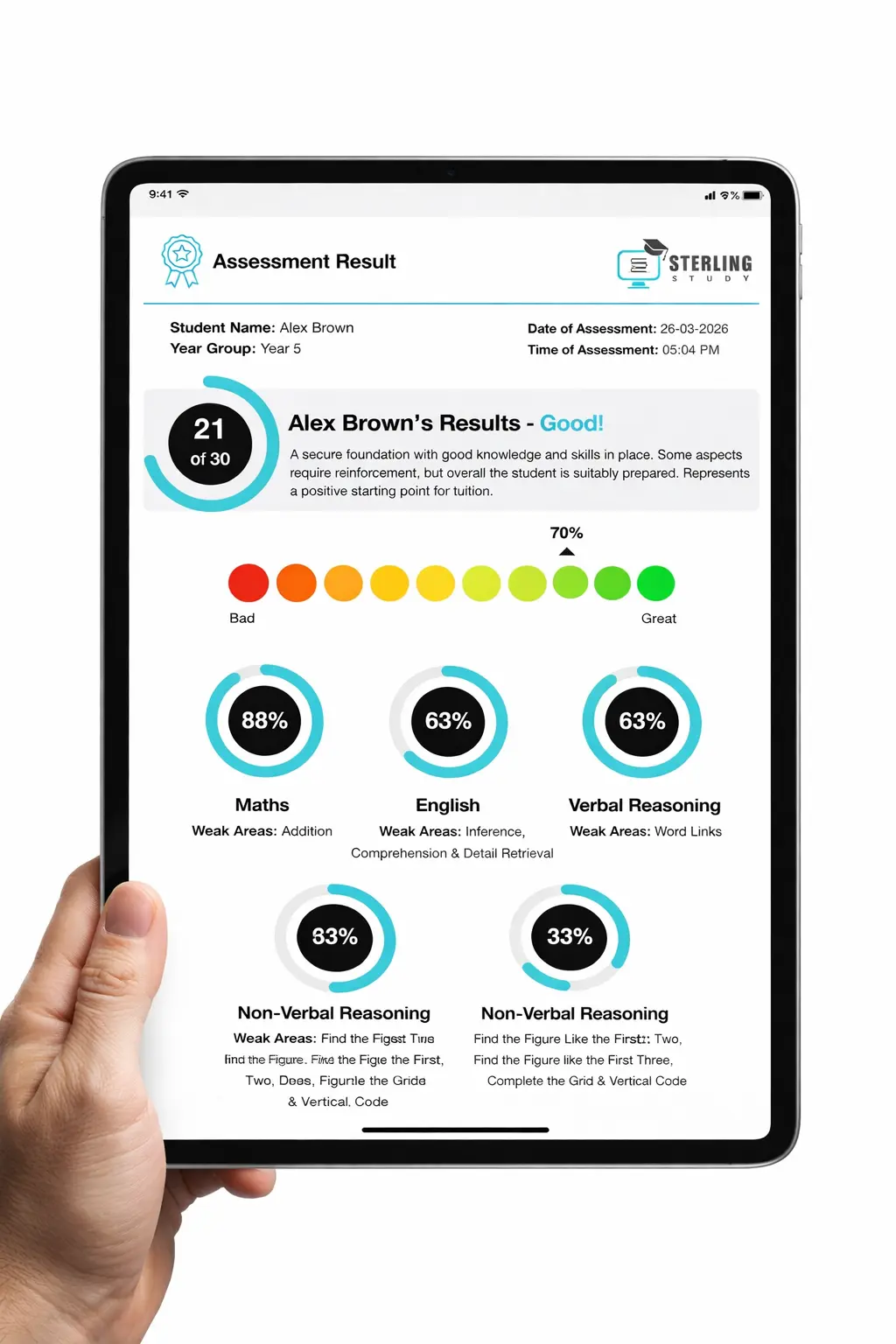
Find the gaps.
Before summer.
- ✓ Subject-by-subject gap breakdown
- ✓ Knowledge vs exam technique vs timing errors
- ✓ Where they sit against grade boundaries
- ✓ Detailed PDF results sent immediately
- ✓ No strings attached
5. Maths, English and Science: What Actually Helps
Maths. Start with the basics the mock exposed, usually algebra, fractions, percentages and ratio. Write every step down, because method marks count even when the answer's wrong. Lots of students can solve 2x + 5 = 15 but freeze when the same equation is hidden in a story about cinema tickets, so mix wordy questions in. Fifteen minutes of GCSE practice questions on maths most days beats a two-hour Sunday session, and a timed GCSE mock maths test every fortnight shows whether it's sticking. One thing worth knowing: in 2027, GCSE Maths, Physics and Combined Science papers all come with a formulae or equation sheet, so the skill is picking the right formula and using it, not memorising the list. Practise with the exam board's sheet. That cycle is what our GCSE Maths course runs on.
English. 'You can't revise for English.' It isn't true. The most common problem is retelling what happens instead of analysing how the writer creates meaning. Get your child to take an old answer, put it next to the mark scheme, and rewrite one paragraph. That teaches more than a whole new essay.
Science. Knowing a definition of photosynthesis is one thing; reading a results table about light intensity is another. Higher grades depend on applying knowledge and on six-mark answers, so GCSE practice questions in science should include those longer answers, checked against the mark scheme. Biology and Chemistry don't come with a sheet, so those facts still need learning. Our GCSE Science course is built around exactly these spots.
Using past papers properly
Notes away, mark it with the exam board's scheme, label every lost mark using the table above, then revise and redo. Use topic questions first. Save full timed papers for February onwards, once the basics are back.
6. A Simple GCSE Revision Roadmap
The main written GCSE exams run from Monday 10 May to Friday 18 June 2027. Keep Wednesday 23 June free as the national contingency day, and results day is Thursday 19 August 2027. Here's one way to lay out GCSE mock revision between now and then.
| Month | Focus |
|---|---|
| November | Go through the mocks and list weak topics |
| December | Rebuild the basics |
| January | Topic-by-topic revision |
| February | Exam technique |
| March | Timed practice |
| April | Full GCSE mock past papers |
| May–June | Final prep and the exams |
If there's a second round of mocks in the new year, compare it with November. A topic that hasn't budged needs a different method, not more of the same.
7. Revision That Actually Works
Hours at a desk tell you very little. Fifteen sharp minutes after dinner often beat the last tired hour before midnight.
This is where my neuroscience background comes in handy. Memory gets stronger each time you drag something back out of it, not each time you re-read it. So: test yourself with flashcards or a blank page, come back to topics after a day, a week, then a few weeks, mix topics in one session, and redo the questions you got wrong.
The common traps? Re-reading notes. Avoiding the hard topics. Treating past papers as a score to beat instead of a list of things to fix.
Every few weeks, check what's changing: topic scores, repeated mistakes, timed paper results. Shift the timetable to follow the gaps. And as a parent, be the coach, not the supervisor. Notice small wins out loud, and skip comparisons with friends or siblings.
8. Does Your Child Need a Tutor?
Not necessarily, and I'd be wary of anyone who says otherwise. Plenty of students improve on their own once they've got a plan and an honest picture of where the marks went. Extra help is worth considering when grades won't shift despite real revision, the same ideas keep tripping them up, or they simply don't know where to start.
If you do look, find someone who knows the subject properly, keep groups small, and make sure progress is checked and reported back to you.
Before your child spends a single lesson with anyone, ask how the tutor was vetted and who's responsible for safeguarding. At Sterling Study, every member of our UK teaching staff is DBS-checked, and our Company Director, Ms Yesha Mukhtiar, is our named Safeguarding Officer, responsible for our safeguarding policy. If a provider goes vague when you ask, that tells you plenty.
For what it's worth, here's what we do: live online GCSE Maths, GCSE English and Science in groups of five at most, led by Dr Pupko and me, with a short assessment every month. You can start with a free diagnostic and trial lesson, and there's no long contract.