GCSE Maths Exam Boards: AQA vs Edexcel vs OCR Explained
Not sure what GCSE Maths exam board your child is sitting? Here’s what is different between AQA, Edexcel & OCR, what stays the same & whether it really matters.
Not sure where the marks are slipping? Our free GCSE Maths diagnostic shows exactly which topics need work →
AQA, Edexcel & OCR are the 3 main GCSE Maths exam boards. They all test the same maths and Ofqual makes sure a grade 6 on one board is worth the same as a grade 6 on another. So there is no easy board! All 3 have three 90 minute papers and one of them is non-calculator. The main differences are that OCR papers are out of 100 (not 80) and OCR has its non-calculator paper second. The exam board won’t change what your child’s grade is worth but it does change how they should revise.
If you’ve recently discovered that there are 3 exam boards for GCSE Maths, you’re not alone! It’s usually the tutor that mentions it or you may have picked up a revision book with a different logo to the one you use at school. You may start panicking (is my child on the tough one?! Have they been practising on the wrong papers?!). But the answer is likely ‘probably not’ and ‘no’. One parent I spoke to said “I didn’t even know there were three of them. I just thought it was maths.” This was a brief conversation but shows how easy it is to get confused.
1. What’s the difference between AQA, Edexcel & OCR GCSE Maths?
The exam boards design, deliver and mark the papers. All 3 exam boards follow Ofqual guidelines and must include all the same content from the Department for Education. All students will be tested on the same content regardless of their exam board. The main differences between the exam boards are:
| AQA | Pearson Edexcel | OCR | |
|---|---|---|---|
| Specification code | 8300 | 1MA1 | J560 |
| Number of papers | 3 | 3 | 3 |
| Length of each paper | 1 hour 30 minutes | 1 hour 30 minutes | 1 hour 30 minutes |
| Marks per paper | 80 | 80 | 100 |
| Total marks | 240 | 240 | 300 |
| Non-calculator paper | Paper 1 | Paper 1 | Paper 2 (Foundation) or Paper 5 (Higher) |
| Formula sheet provided | Yes | Yes | Yes |
| Tiers | Foundation (1 to 5), Higher (4 to 9) | Foundation (1 to 5), Higher (4 to 9) | Foundation (1 to 5), Higher (4 to 9) |
To be honest, the tier is the most important thing. Foundation can only go up to a 5 whereas Higher starts at a 4. The tier will be decided by the school and many schools will not decide until after mocks in Year 11. If you know your child is on the cusp of a 4/5 then an email to their teacher asking what tier they are on will help.
2 Differences Families Often Miss
The first thing is the order of the papers. AQA and Edexcel both have their non-calculator paper first whereas OCR has a calculator paper (Paper 4) in Higher, a non-calculator paper (Paper 5) and a calculator paper (Paper 6). Whilst this is a small detail, if your child has been using another exam board’s revision packs they may have learnt that paper 1 is non-calculator. This means that they may feel a little unbalanced in their OCR exams for a few minutes.
The second difference is that OCR papers are worth 100 marks whereas AQA and Edexcel are only worth 80. This means there will be more questions to answer in the same amount of time. Some students like this as the difference in marks won’t matter. However, others feel that they’re rushing. You can find out which your child is by using mocks.
Edexcel vs AQA – Do the questions feel different?
A little. Many maths teachers will mention that Edexcel has more real-life scenarios in their questions. OCR also asks students to explain their work earlier with more show that questions. AQA is in the middle. Whilst there is nothing set in stone, if your child understands their work they will do well on any exam board. However, if they have only experienced one exam board and then get a different one the week before their exam they may struggle.
2. Which Exam Board is Easiest for GCSE Maths?
None of them are easier! Unfortunately we can’t give you a more exciting answer but it is regulated. Ofqual want your child to receive the same grade regardless of exam board. To achieve this they use statistical predictions to grade. Ofqual have even explained why most comparisons between exam boards won’t work and have even told teachers directly that choosing a certain specification shouldn’t stop students achieving top grades.
Schools usually choose an exam board for normal reasons. Maybe the department like the textbooks or teacher training. Or they have always used that exam board. No-one is trying to put their students onto an easier exam board as there isn’t one!
Why are the grade boundaries different?
This is where some myths come in. The official grade boundaries for Higher tier in June 2026 are:
| Higher tier, June 2026 | Grade 4 | Grade 7 | Grade 9 |
|---|---|---|---|
| AQA (out of 240) | 63 (26%) | 166 (69%) | 219 (91%) |
| Pearson Edexcel (out of 240) | 50 (21%) | 146 (61%) | 208 (87%) |
| OCR (out of 300) | 57 (19%) | 170 (57%) | 264 (88%) |
Note: Percentages have been rounded to the nearest whole number. Make sure to check your exam board’s published grade boundaries for the series your child sat.
At first glance it looks like OCR is easier to get a 7 (57%) compared to AQA (69%). However, grade boundaries are set after marking. This means examiners can see how students did. If the paper was harder than expected grade boundaries will be lower meaning they still achieved the same level of maths. A low grade boundary means a harder paper.
These change every year. For example, Edexcel Foundation grade 4 increased from 144 in 2025 to 151 in 2026. Whereas AQA decreased from 160 to 154. Comparing the same exam board, tier & series is the only way to compare.
3. How Do I Know What Exam Board My Child is Sitting?
This can be done within 2 minutes! (If you are a student who has searched ‘what maths exam board am I doing?’ on Google then these will work for you!)
- Take a mock paper. Look at the front cover. There will be a logo and code. 8300 = AQA, 1MA1 = Edexcel & J560 = OCR. Look for an F or H after the paper number. This is the tier.
- Look for the statement of entry. Year 11s will have a statement listing each exam they are sitting. It will have the exam board, code & tier.
- Check the school website. Many schools will have their exam boards listed on their curriculum or Key Stage 4 page.
- Check the school’s revision guide. Usually this will match the exam board they use.
- Ask their maths teacher. This can be done in 2 lines. Ask them what tier they are on.
Once you know the code save it somewhere on your phone. You’ll need it for past papers, grade boundaries & a chat with a tutor.
4. Does it Matter What Exam Board My Child Does?
No – for the grade on their certificate. The exam board won’t affect what grade they get. A sixth form, university & employer will just see ‘GCSE Mathematics grade 6’. No-one will ask what exam board they did and they shouldn’t.
Yes – for revision. Whilst the topics are the same, you want your child to practise on papers that look the same as the real thing. There are 3 key areas to focus on:
If you want more questions on simultaneous equations or circle theorems you can use any exam board. An Edexcel question will help an AQA student the same. However, ensure you’re using full timed papers from the correct exam board. Our GCSE Maths programme works on this principle. Usually progress is quickest when focusing on specific topics and question types that they’re losing marks on.
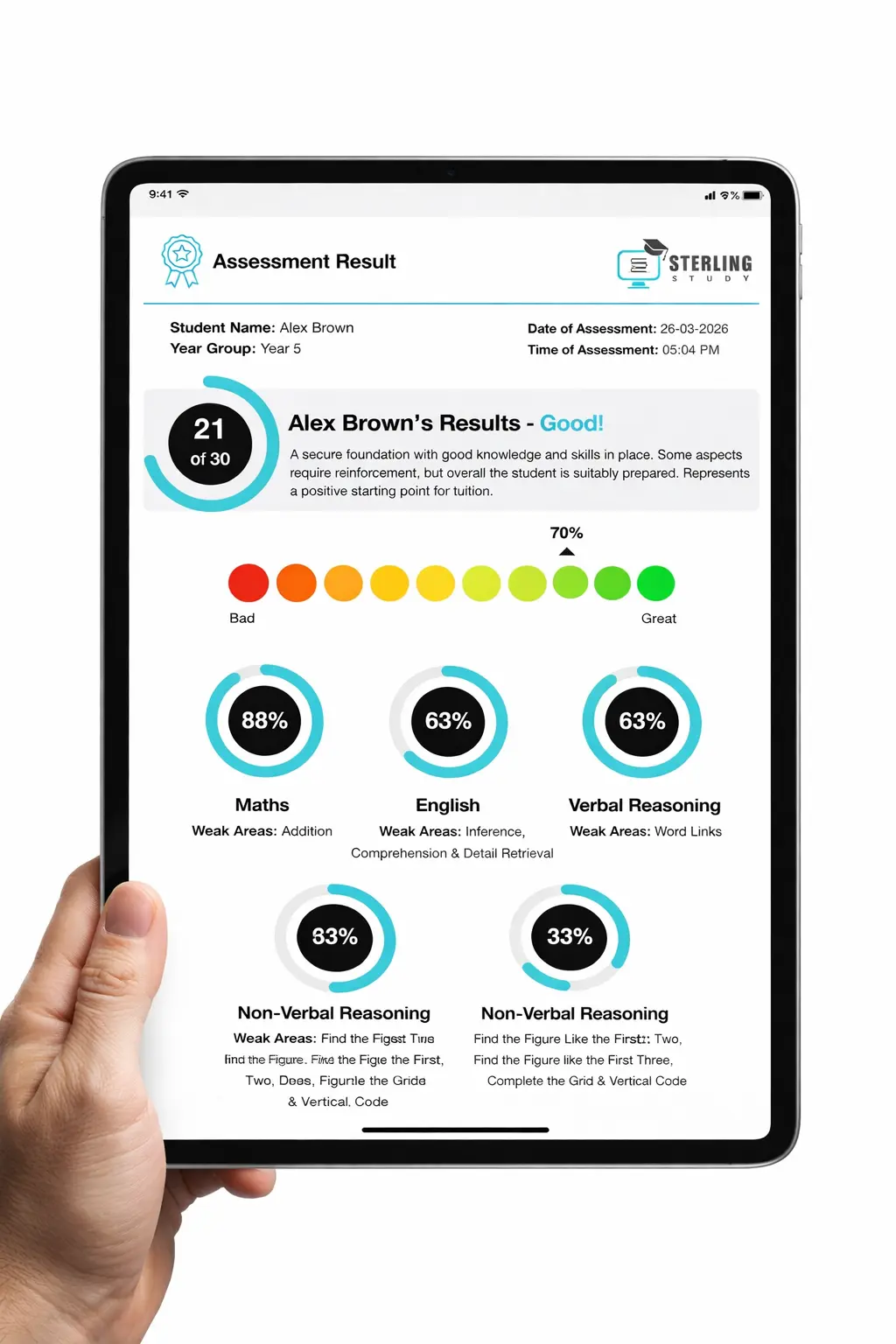
Identify maths gaps
- ✓ GCSE Maths breakdown showing where they’re losing marks
- ✓ Time-per-question analysis
- ✓ How they’re doing compared to their exam board’s grade boundaries
- ✓ Instant detailed PDF results
- ✓ No strings attached
5. Is there a Formula Sheet for GCSE Maths in 2026 & 2027?
Yes! This is better news than you may have heard. Formula sheets were introduced to GCSE Maths in 2022 as a post-pandemic change. Every year they have been extended. However, in 2026 they stopped being temporary. In February the Department for Education told Ofqual that students will not need to learn these formulae for the duration of the current GCSE specifications. Ofqual then confirmed that exam boards must continue to provide them. AQA have confirmed that this applies to resits as well.
Some websites have not updated. They may say the formula sheet is going in 2028 and that year 10s should learn everything. This is no longer true. As the decision was made in 2026 the formula sheet will be there for the duration of the current specifications. If your child has heard differently make sure to double check where they got the information from.
A few tips: Each exam board will have their own formula sheet. Ensure you’re using the one from your child’s exam board. The formula sheet is just a list of formulae. It will not tell them which formula to use or how to rearrange it. This is where the marks come from.
6. Can My Child Resit Their GCSE Maths on a Different Exam Board?
In theory yes. The content and standard is the same so if your child did AQA in the summer they could resit on Edexcel or OCR. However, most schools and colleges will not like to change exam boards as your child will know the format. Some families will intentionally change exam boards (some prefer OCR’s longer papers). However, this will depend on your child’s school/college agreeing as they are the ones entering them.
The exam dates are important. Only maths and English Language can be resat in November. The student must have been 16 or over on 31st August of that year. Maths exams this year took place on 4th, 6th and 9th November. AQA results will be released on 14th January 2027. If they are too young or missed out then they will have to do it next summer.
Many families look for a maths tutor during mocks/resits. When looking for a tutor make sure to ask about safeguarding. At Sterling Study all UK staff undergo DBS checks before teaching any lessons. Our Company Director, Ms Yesha Mukhtiar, is our named Safeguarding Officer and is responsible for our safeguarding policy. When booking a free trial assessment ask us about any of this. If another company refuses to answer these questions then you know something!
7. Will GCSE Maths Exams Change in the Future?
Eventually yes! However, students in Year 9/10/11 won’t be affected. Following the Curriculum and Assessment Review the government have committed to a new national curriculum from September 2028. GCSEs will be updated and taught from 2029/2030. On average students will sit 2.5-3 hours less exams. The earliest anyone would sit the new exams is Summer 2031. Until then the exam boards in this guide (AQA, Edexcel & OCR) will remain the same. The exam boards will release draft versions well in advance.