The KS3 National Curriculum: What Your Child Should Know by Year 9 (2026)
The KS3 national curriculum sets clear expectations — but it's written for teachers, not parents. This is the plain-English version: what your child should know across Maths, English, and Science by the end of Year 9.
Not sure if your child is on track? Book a free diagnostic — our PhD-led team will tell you exactly where the gaps are →
The National Curriculum for Key Stage 3 is publicly available. But it's written in statutory language for teachers, not in the practical terms parents need to understand whether their child is genuinely on track for strong GCSE performance. Here's the plain-English version.
Fix them.
For free.
- ✓ Subject-by-subject breakdown across all Science topics
- ✓ Time-per-question analysis
- ✓ Where you stand vs grade boundaries
- ✓ Detailed PDF results sent immediately
- ✓ No strings attached
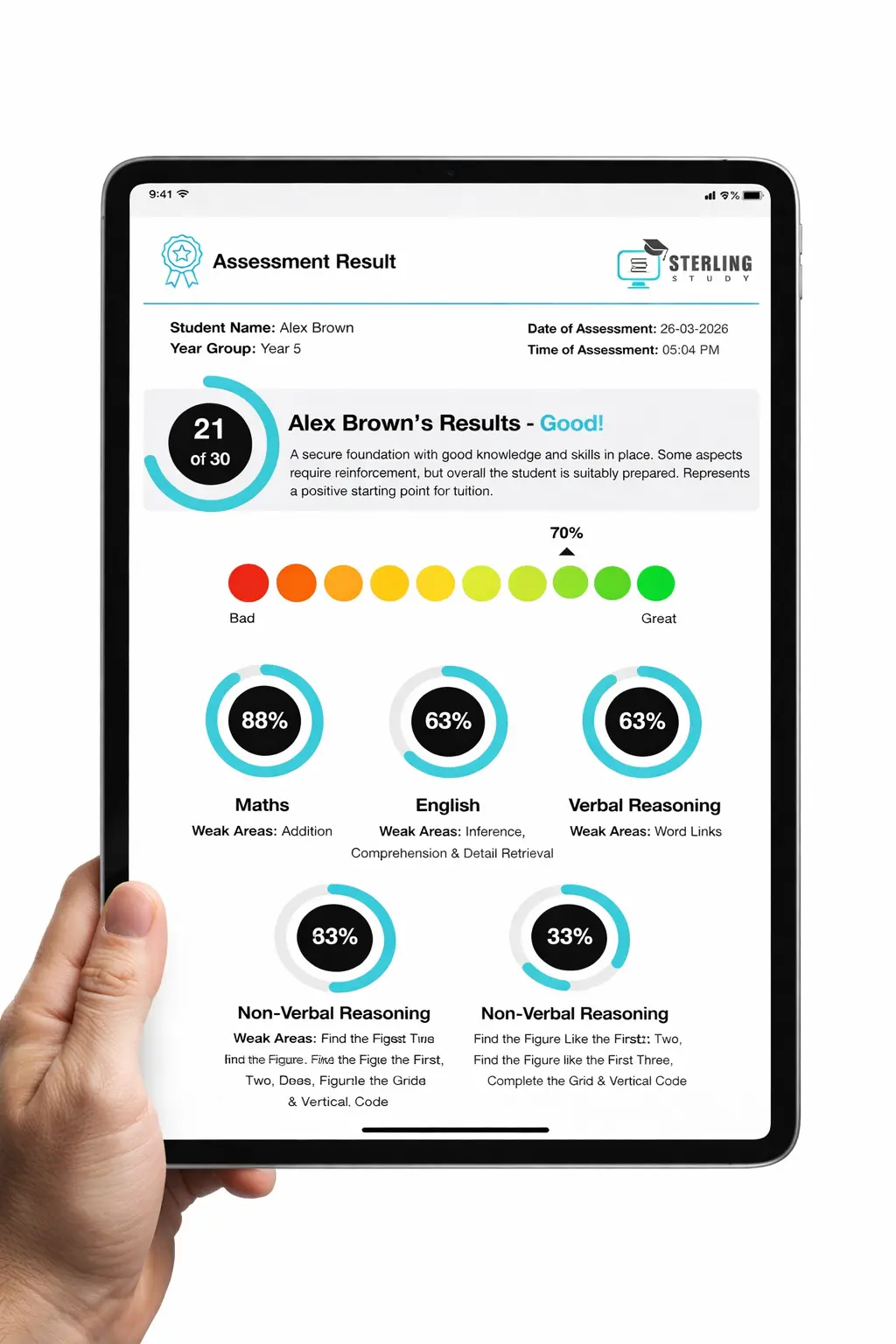
By End of Year 9 — Maths Benchmarks
These are the Maths topics a student should be confident with before entering Year 10. Gaps here don't stay contained to Maths — they feed directly into GCSE Science, particularly Physics and Chemistry.
A student who reaches Year 10 unable to factorise simple quadratics or apply trigonometry to a right-angled triangle has a significant KS3 gap that will affect Year 10 GCSE teaching from the very first week. Both are fixable in Year 9 — but not without targeted work.
By End of Year 9 — English Benchmarks
English at KS3 is less about topic coverage and more about developing skills across reading, writing, and grammar. By the end of Year 9, students should be writing analytically and engaging with literature at a level that prepares them for GCSE-style questions from the first week of Year 10.
| Skill | Year 9 Benchmark |
|---|---|
| Analytical writing | Extended analytical essays with argument, evidence, authorial intent, and some contextual awareness |
| Unseen text analysis | Inferred meaning and language analysis — not just surface comprehension |
| Non-fiction writing | Persuasive and informative texts for a specific audience with accurate, varied language |
| Literature | Encountered Shakespeare and at least one 19th-century text. Beginning GCSE-style analytical engagement. |
| Grammar | Accurate and varied in their own writing. Can identify and explain grammatical features in others' texts. |
By End of Year 9 — Science Benchmarks
KS3 Science covers Biology, Chemistry, and Physics across Years 7 to 9. By the end of Year 9, students should have solid foundational knowledge in all three disciplines — and the practical skills to describe, plan, and evaluate a scientific investigation.
- Cell structure
- Genetics basics
- Photosynthesis and respiration
- Evolution
- Ecosystems
- Periodic table
- Chemical reactions (acids/bases, combustion)
- Atomic structure
- Separation techniques
- Forces and Newton's laws
- Wave properties
- Basic electricity and circuits
- Magnetism
- Space science