From Year 10 to Year 11: A Parent's Guide to Summer GCSE Maths Prep (Without the Burnout)
A short daily habit over the six-week summer holidays, built around what your child's Year 10 mocks actually showed, makes far more difference than a last-minute cram in April. Here is the complete six-week roadmap, the RAG system for prioritising topics, realistic daily time commitments, and a September readiness checklist, with guidance from Sterling Study's PhD-led tutors.
Not sure where your child's gaps are? Book a free diagnostic - our PhD-led team will pinpoint exactly where they stand →
The summer after Year 10 is the single biggest window most students get to close GCSE Maths gaps before the pace of Year 11 takes over. You do not need six hours a day and you do not need to redo the whole syllabus. A short daily habit, built around what your child's Year 10 mocks actually showed, gets far better results than a last-minute cram in April. This guide gives you a six-week roadmap, a simple red/amber/green system for deciding what to revise first, realistic daily time commitments, and a September readiness checklist, so you and your child can walk into Year 11 without the usual scramble.
If you are reading this in the days after Year 10 mock results came home, you are probably feeling one of two things: relief, or a low hum of worry that will not quite switch off over the summer. Both are completely normal. Most parents underestimate how much the summer between Year 10 and Year 11 actually matters, right up until their child sits down in September and the pace of lessons jumps overnight. This guide was put together by Sterling Study's PhD-led teaching team, including founder Dr Parth Patel, who holds a PhD in Neuroscience from UCL, to give you a plan that is realistic rather than aspirational: enough structure to make a genuine difference to your child's GCSE Maths grade, without turning the school holidays into a second term.
1. Why the Summer After Year 10 Actually Matters
It is easy to think of the summer holidays as a full stop between two school years, a clean break before Year 11 starts properly in September. In practice, it is closer to a hinge. What happens in these six weeks quietly decides how confident, or how behind, your child feels walking into the first Maths lesson of Year 11.
Year 11 does not ease in gently. Most schools move straight into exam-focused content from the first week, often revisiting topics from Year 9 and 10 at speed on the assumption that students remember them well enough to build on. For a student who left Year 10 with solid foundations, that pace is manageable. For a student who was already unsure on ratio, or who guessed their way through simultaneous equations in the summer exam, that same pace can feel like the ground moving under them within a fortnight.
This is not about turning the summer into revision boot camp. It is about using a small, protected amount of time to make sure your child starts Year 11 from solid ground rather than from a gap they have been quietly hoping nobody notices.
Consider two students who both finished Year 10 with a grade 5 in Maths. The first has that grade because number work, ratio and probability are genuinely strong, with a single shaky topic in algebra pulling the average down. The second has an identical grade built almost entirely on strong number work, while algebra, geometry and probability are all weak but happened to be under-represented on that particular paper. On paper, these two students look the same. In September, they are not. The first needs a fortnight of focused algebra practice. The second is one difficult topic test away from a grade that drops rather than rises. Neither family would know the difference without looking past the headline number, which is exactly why the next section of this guide focuses on reading mock results properly rather than just noting the grade and moving on.
2. Should My Child Revise GCSE Maths Over the Summer?
In most cases, yes, though not in the way that question usually gets answered. The honest version is: a small amount of regular, well-targeted practice over the summer holidays makes a measurable difference to how a student performs in Year 11, particularly in a subject like Maths where skills build directly on top of one another. Skipping a topic in Year 10 does not just cost marks on that topic; it makes several Year 11 topics harder to access too, because so much of GCSE Maths is cumulative.
That said, "revise over the summer" does not have to mean hours at a desk every day. Short, regular sessions beat long, occasional ones, and the exact numbers to aim for are covered later in this guide.
Short and regular beats long and rare. A small, prioritised list of gaps, revised in brief sessions across the summer, will outperform an ambitious plan to cover the whole syllabus in a fortnight.
The families who get the most out of the summer tend to do three things: they look honestly at the Year 10 mock results rather than avoiding them, they pick a small number of priority topics rather than trying to cover everything, and they protect a consistent, modest slot of time rather than an occasional marathon session. The rest of this guide builds out exactly how to do that.
3. What Your Year 10 Mock Results Are Really Telling You
A mock result is often read as a single number, a grade on a piece of paper that either reassures or alarms. That single number is the least useful part of the report. The far more valuable information sits underneath it, in the pattern of which questions were answered confidently, which were rushed, which were left blank, and which were attempted but methodically wrong.
A grade 5 built on strong number work but weak algebra tells a completely different story to a grade 5 built on strong algebra but weak number work, even though the grade on the front page looks identical. The first student needs targeted algebra practice over the summer. The second needs a different set of topics entirely. Treating both students the same because they share a grade is one of the most common mistakes families make when planning summer revision.
If your child's school offers a full topic-level breakdown alongside the mock grade, that is worth reading properly before deciding on a summer plan. If it does not, or if the breakdown feels thin, a structured progress test is a useful way to get a clearer, more current picture before the summer starts, rather than planning around exam results that are already a few weeks old.
It is also worth paying attention to how a question was answered, not just whether it was correct. A blank answer usually means the student did not recognise the topic at all. A wrong answer with a sensible method attempted usually means the concept is understood but the execution slipped, perhaps a sign error, a misread question, or a step skipped under time pressure. These look identical on a mark scheme but need almost opposite solutions: the first needs re-teaching from the beginning, the second usually just needs more timed practice under exam conditions. Sitting with your child for twenty minutes and going through exactly where each mark was lost, rather than only checking the final total, tends to be one of the highest-value uses of time in the whole six weeks.
4. The RAG Method: Turning Mock Results Into a Revision Priority List
Once you have a topic-level picture of where your child stands, the next problem is deciding what to actually do with it. This is where a simple red, amber, green system earns its keep. It is not complicated, and that is exactly the point: the goal is a system your child can use themselves, without needing you to interpret it for them every time.
- ✓Red topics: the student could not attempt the question, or got it substantially wrong with no clear method. These are the priority for the summer, but only two or three at a time, never all of them at once.
- ✓Amber topics: the student attempted the question with a reasonable method but made a careless error, ran out of time, or got partway through before losing the thread. These respond well to short, regular practice rather than deep re-teaching.
- ✓Green topics: the student answered confidently and correctly. These need occasional maintenance, a handful of questions every week or two, purely to stop them slipping back into amber.
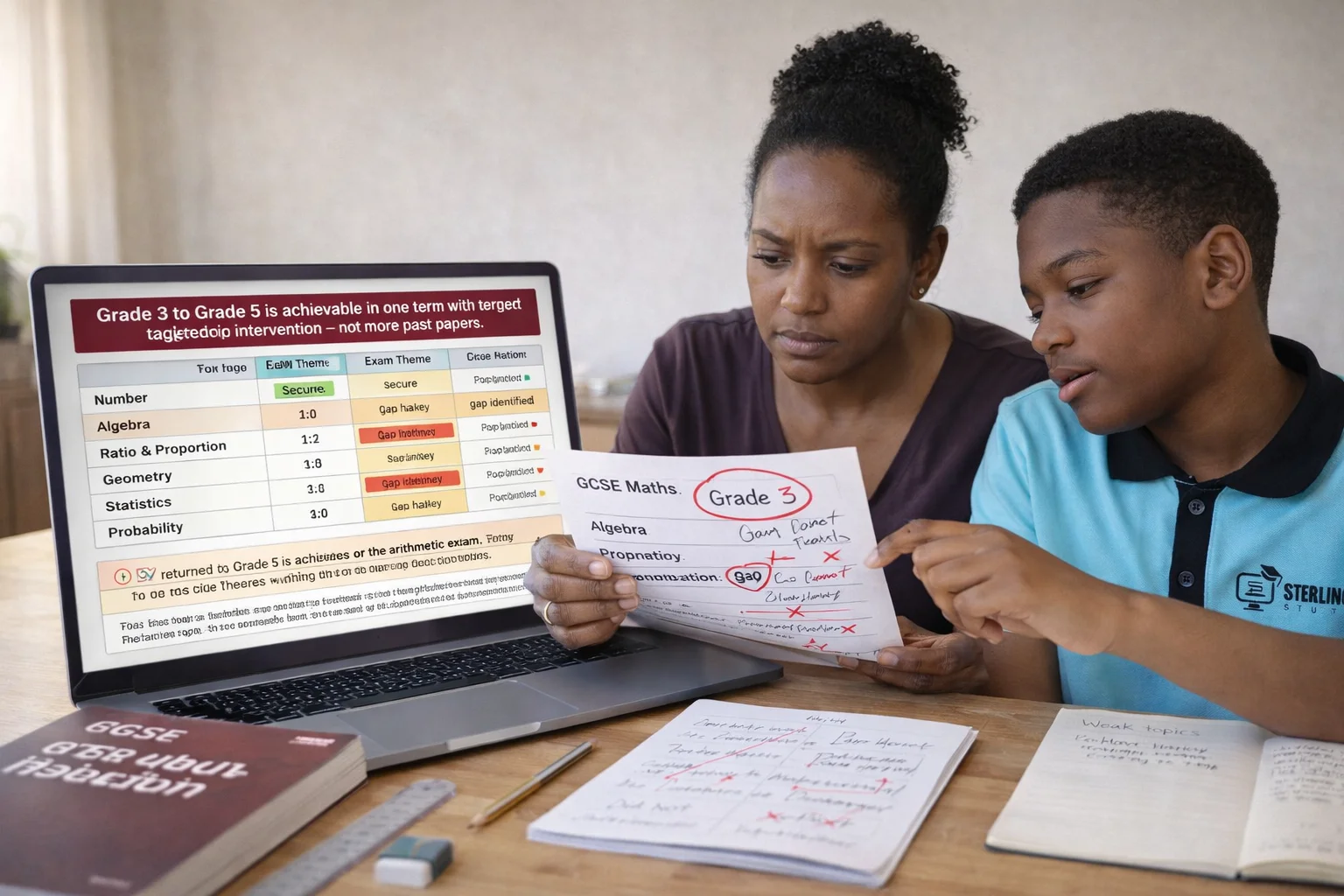
Going through a past paper or topic test with your child and sorting every question into one of these three categories, rather than just looking at the total mark, turns a vague sense of "Maths needs work" into a concrete, short list. Most students, once this is done properly, find they have three or four genuine red topics rather than the twenty they were dreading.
| Category | What it means | Summer approach |
|---|---|---|
| Red | No reliable method, question left blank or fundamentally wrong | Two to three focus topics per week, re-taught from basics before practising |
| Amber | Reasonable method, but errors, hesitation, or timing issues | Short daily or every-other-day practice sets, ten to fifteen minutes |
| Green | Confident and accurate | One short maintenance set every week or two, nothing more |
5. Different Starting Points: Matching the Plan to Your Child's Current Grade
Generic revision advice tends to serve the middle of the distribution well and everyone else less well. A student aiming to secure a grade 4 needs a genuinely different summer to one already sitting at grade 8, and a student who finds Maths a slog needs a different kind of support to one who simply forgot to revise last year. The five scenarios below cover most of the families reading this guide; find the one closest to your child's situation and treat it as your starting point.
Scenario: aiming to secure a Grade 4
This student's Year 10 mock came in below the standard pass threshold, at grade 2 or 3, and the priority is straightforward: consolidate the foundational number, fractions and basic algebra skills that everything else depends on, rather than attempting Year 11-level content on shaky ground. Confidence tends to be as much of an issue as knowledge here, since a run of low grades wears a student down. Short, achievable wins early in the summer, a topic properly nailed rather than three topics half-covered, matter more than raw coverage.
Scenario: aiming for a Grade 5 or 6
This is the most common profile: a student broadly on track, with a handful of specific weak spots rather than a systemic problem. The RAG method described earlier in this guide was built with exactly this student in mind. The main risk for this group is treating every topic as equally urgent rather than working from an honest, prioritised red list.
Scenario: aiming for Grade 7 and above
A student already working at grade 7 does not need less summer preparation, they need a different kind. Foundation-level maintenance work will feel repetitive and can dent motivation rather than build it. Better uses of the summer include Higher-only content not yet formally taught, multi-step and non-routine problem-solving questions that reward independent reasoning, and building speed and accuracy under timed conditions, since strong students are more often let down by careless slips under pressure than by not knowing the method.
Scenario: already at Grade 8 or 9
For a small number of students, the ceiling of GCSE content is already within easy reach, and the real risk over the summer is disengagement rather than gaps. This group tends to benefit most from stretch material beyond the specification, exposure to genuinely unfamiliar problem types, and, where relevant, an early look at A-level content, since a summer spent purely repeating GCSE questions they can already answer comfortably tends to be wasted time.
Scenario: the student who loses motivation easily
This scenario cuts across every grade band. Some students start the summer with good intentions and drift by week two, not because the plan was wrong but because motivation naturally dips once the initial post-mock urgency fades. For this student, the structure matters more than the content: a fixed, short daily slot, visible progress tracking, and a say in which topic gets tackled first tend to matter more than the specific topics chosen. The confidence tracker and motivation section later in this guide are built specifically for this situation.
| Year 10 mock outcome | What it usually means | Summer priority |
|---|---|---|
| Well below expected grade (e.g. grade 2 to 3 when a 4 to 5 was expected) | Foundational gaps from earlier years, or significant exam anxiety affecting performance | Rebuild core number, fractions and basic algebra first; consider structured support |
| Roughly as expected, but patchy across topics | Normal profile; a handful of specific red topics rather than a systemic problem | Follow the six-week roadmap and RAG priority list as set out in this guide |
| Grade 7 or above, consistently | Strong foundations; the risk is boredom or complacency, not knowledge gaps | Higher-only content, non-routine problem solving, and timed accuracy practice |
| Result does not match classroom performance either way | Worth investigating before assuming the mock is the accurate picture | A fresh diagnostic assessment to establish a reliable baseline before planning |
Do this now: find your child's scenario above, then let that scenario, not a generic six-week plan, set the tone for the summer ahead.
6. Should My Child Do Foundation or Higher Tier Before Year 11?
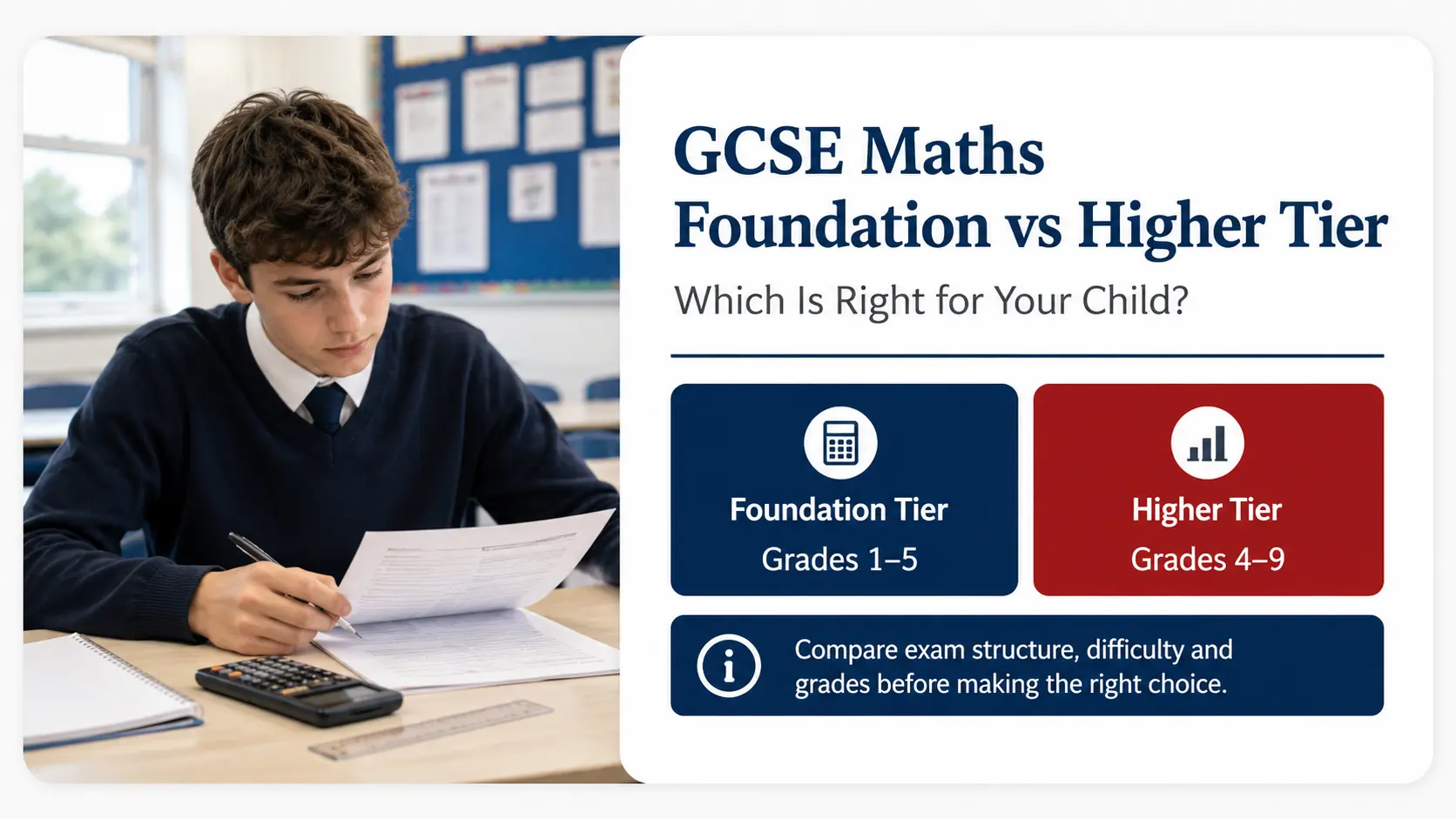
For students sitting close to the Foundation and Higher boundary, the summer after Year 10 is often when this decision starts to firm up, even if it is not made official until later in Year 11. Foundation Tier covers grades 1 to 5, while Higher Tier covers grades 4 to 9, which means a student entered for Higher who falls below a grade 4 risks an ungraded result, a genuinely high-stakes gap in the system that families are not always warned about clearly.
This is a conversation worth having honestly rather than optimistically. A student comfortably scoring grade 6 or 7 on mock papers has room to be pushed on Higher-only content like more advanced trigonometry, surds, and higher-tier algebra. A student hovering around grade 4 to 5 is usually better served consolidating Foundation-level fluency thoroughly, since a secure grade 5 is a stronger outcome than an unstable attempt at grade 6 through Higher Tier. If this is a live question for your family, our GCSE Maths team can talk through the specifics of where your child currently sits.
Exam boards, whether Edexcel, AQA or OCR, structure this decision slightly differently in terms of overlap content, so it is worth checking with your child's school which specification they follow before assuming the boundaries are identical across boards.
7. Does It Matter Which Exam Board My Child Sits GCSE Maths With?
Edexcel, AQA and OCR all cover the same core content, set by the same national specification, so the underlying maths a student needs to know is essentially identical regardless of board. What differs, based on general patterns tutors see rather than any official ranking of difficulty, is style and presentation rather than substance.
| Exam board | General style tutors notice | What this means for summer revision |
|---|---|---|
| Edexcel | Questions often lean towards multi-step problem solving, with several skills combined in one question | Practise linking topics together, not just answering each one in isolation |
| AQA | Questions are often set in a clear real-world context and reward careful reading and reasoning | Practise reading longer worded questions carefully and showing full reasoning, not just a final answer |
| OCR | Less commonly used than Edexcel or AQA, with a broadly similar structure to both | Confirm which board your school uses and practise on that board's own past papers where possible |
These are general tendencies rather than fixed rules, and the difference between boards matters far less than the difference between a student who has practised past papers from their own board and one who has not. The single most useful thing to check this summer is which board your child's school actually uses, since past papers and mark schemes are specific to each board and practising on the wrong one can give a slightly misleading sense of readiness.
8. The Six-Week Year 10 to Year 11 Summer Roadmap
Rather than a vague instruction to "keep on top of Maths," it helps to have an actual shape to the six weeks. This roadmap assumes a modest, sustainable daily commitment; it is not meant to fill every day, and weeks 3 and 5 are deliberately lighter to avoid burnout.
| Week | Focus | What to actually do |
|---|---|---|
| Week 1 | Diagnose | Go through the Year 10 mock paper topic by topic. Sort every question into red, amber or green. Agree the top three red topics together. |
| Week 2 | First red topic | Re-teach the first red topic from the basics, then build up to GCSE-style questions on it. Fifteen to twenty minutes on most days. |
| Week 3 | Lighter week | Reduce to short maintenance practice only. This is a genuine rest week; protecting motivation matters more than covering new ground. |
| Week 4 | Second red topic | Same process as Week 2, applied to the second priority topic. Mix in a few questions from Week 2's topic to check it has stuck. |
| Week 5 | Third red topic, lighter pace | Cover the third priority topic at a gentler pace, since this is close to the end of the holidays and motivation tends to dip here. |
| Week 6 | Consolidate and reset | A short mixed-topic paper covering all three red topics plus a handful of ambers, mainly to build confidence before September, not to test. |
If your child's diagnostic throws up more than three genuine red topics, resist the urge to squeeze them all into six weeks. It is far better to fix three topics properly than to skim six superficially. The remaining topics can carry into the early weeks of Year 11 rather than being crammed into August.
Do this now: put these six weeks into the family calendar as fixed slots this week, before the rest of the summer's plans fill the diary around them.
9. Choosing the Right Plan Length: 4, 6 or 8 Weeks
The six-week roadmap above is the default because it fits a typical UK summer holiday, but it is not the only shape a summer plan can take. If you are starting late, have longer than six weeks, or are reading this in the final fortnight before term starts, adjust the structure rather than the underlying method.
| Plan length | Best suited to | How to adapt the roadmap |
|---|---|---|
| 4-week catch-up plan | Families starting late, or with a shorter holiday window | Drop to two priority topics instead of three, keep the diagnostic week, remove the lighter week 3 rest week and take shorter rest days instead |
| 6-week balanced plan | Most families with a standard summer holiday | Follow the six-week roadmap above as written |
| 8-week extended plan | Families with a longer break, or students with more than three red topics | Add a fourth priority topic and a second lighter rest week; spread the same daily time commitment over more calendar days rather than increasing it |
| Last-two-weeks plan | Families reading this guide close to the end of the summer | Pick a single priority topic, ideally the one causing most anxiety, secure it properly, then do one mixed-topic paper in the final few days rather than attempting a full syllabus sweep |
Whichever length you use, the underlying method stays the same: diagnose from the mock results, prioritise a small number of red topics, and keep at least one lighter period built in. Only the number of weeks and the number of topics tackled should change.
topics before
September does.
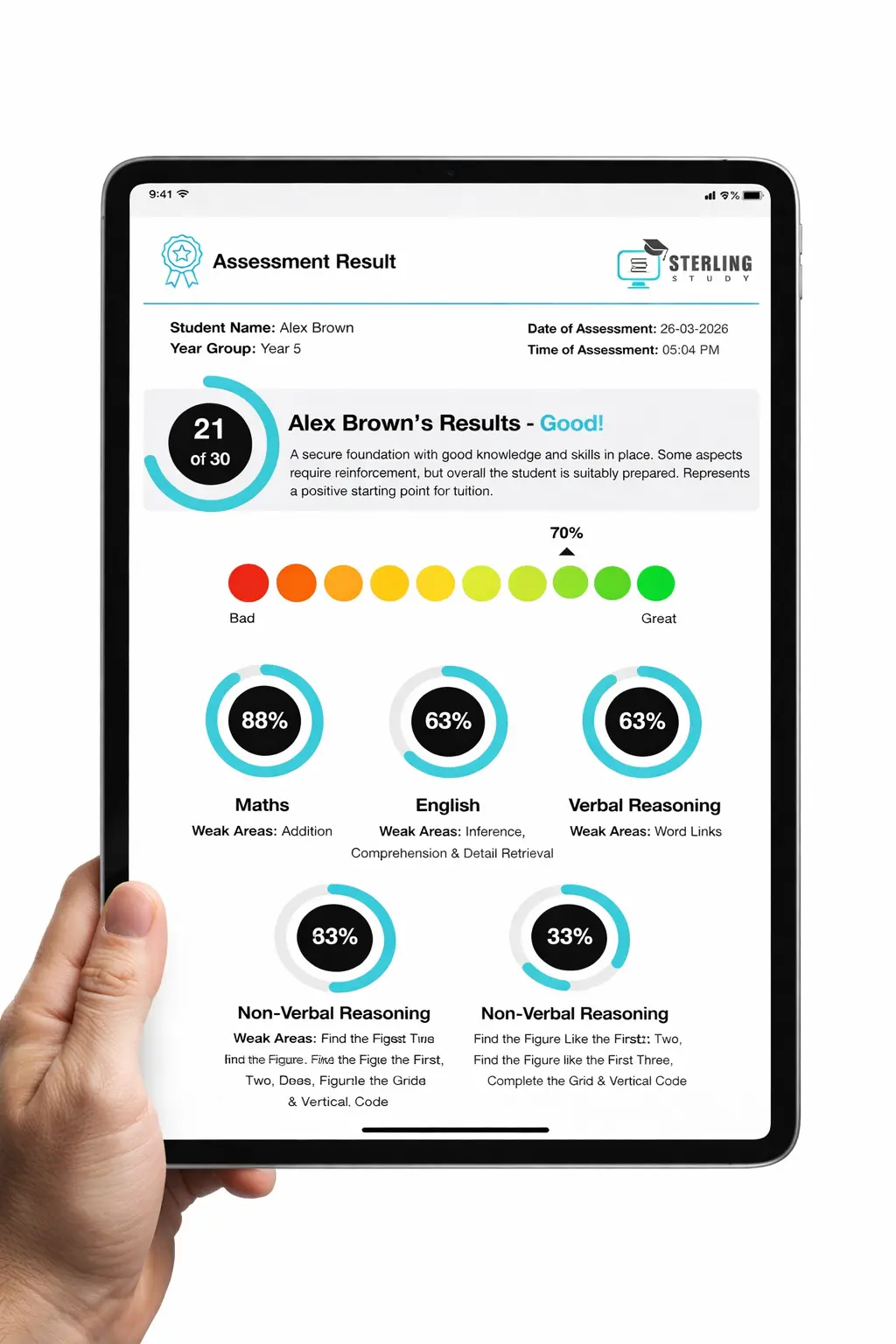
- ✓ Topic-by-topic breakdown across the Foundation and Higher syllabus
- ✓ Clear red/amber/green rating for every area tested
- ✓ Shows exactly where marks are being lost, not just an overall score
- ✓ Detailed PDF results sent immediately
- ✓ No strings attached
10. How Many Hours Should a Year 10 Student Revise During Summer?
Most Year 10 students benefit from around twenty to forty-five minutes of focused GCSE Maths practice on most days over the summer, rather than long, infrequent sessions. There is no single official figure, and be wary of anyone who states one with total confidence, but what research on retention consistently supports is that shorter, more frequent sessions beat longer, infrequent ones, particularly for a subject like Maths where the goal is fluency rather than memorised facts.
If your child is regularly needing over an hour a day just to stay afloat, that is worth treating as information in itself. It usually means the gaps go back further than Year 10, and a plan built around independent practice alone may not be enough without some structured teaching alongside it.
11. Building a Daily Routine Without Burnout
The single biggest reason summer revision plans collapse by week three is that they were never realistic in week one. A plan built around ninety minutes a day, seven days a week, sounds thorough on paper and falls apart within a fortnight, usually leaving both parent and child feeling worse than if no plan had existed at all.
- ✓ Fix the same time of day, ideally earlier rather than later, so it becomes a habit rather than a daily negotiation.
- ✓ Keep sessions short enough that your child can genuinely concentrate for the whole thing, rather than long enough that the last twenty minutes are wasted.
- ✓ Build in two fully protected rest days each week, agreed in advance rather than decided in the moment.
- ✓ Treat the family holiday, if there is one, as a genuine break, not something to feel guilty about missing a session for.
- ✓ Review progress weekly rather than daily; daily check-ins tend to feel like surveillance rather than support.
This approach borrows from what is often called spaced repetition and active recall: returning to the same idea several times across several days, rather than studying it once for a long stretch. It is a more effective way to build genuine understanding, and it happens to be far easier to sustain across six weeks of summer holidays than an intensive daily grind.
12. Which GCSE Maths Topics Should Be Revised Before Year 11?
Every student's red list will look slightly different, but certain topics come up again and again as the ones that quietly undermine Year 11 performance if they are left unresolved. The red, amber, green method described earlier in this guide is always the better starting point where topic-level mock data exists. Where it does not, the ranked list below, split by tier, is a reasonable default.
| Priority | Foundation Tier | Higher Tier |
|---|---|---|
| 1 | Number and fractions | Algebraic manipulation (quadratics, simultaneous equations) |
| 2 | Ratio and proportion | Trigonometry (sine and cosine rule) |
| 3 | Basic algebraic manipulation | Ratio and proportion (compound measures, growth and decay) |
| 4 | Geometry and angle rules | Geometry (circle theorems, vectors) |
| 5 | Probability and basic statistics | Statistics (cumulative frequency, conditional probability) |
Notice that this is not the same as "revise everything." These are the topics most likely to sit underneath other content, which is exactly why they belong on a short priority list rather than being treated as equal to every other topic on the specification. Algebra deserves a particular mention on both tiers: a student who struggles with algebraic manipulation does not just lose marks on algebra questions, they lose access to large sections of geometry, graphs, and problem-solving questions that use algebra as a tool to express a relationship rather than as the subject of the question. This is also why algebra gets revisited so heavily at the start of Year 11.
13. Should Students Use Past Papers or Topic-by-Topic Revision Over Summer?
This is one of the most common questions parents ask, and the honest answer is that both have a role, at different points in the six weeks. Past papers are excellent for identifying gaps and building exam technique under realistic conditions. They are a poor tool for actually teaching a topic a student has not yet understood.
The sequence that tends to work best is diagnose with a past paper or topic test first, teach and practise the specific weak topics on their own, then return to mixed past-paper questions once those topics feel more secure. Jumping straight to full past papers without addressing the underlying gaps usually just repeats the same mistakes on repeat, which is discouraging rather than useful.
14. The Revision Methods That Actually Work, and When to Use Them
"Revise" is not a single activity, and different methods suit different stages of the six weeks. Knowing which one to reach for tends to matter more than how many hours are put in.
| Method | What it involves | Best used for |
|---|---|---|
| Active recall | Attempting a question or explaining a method from memory, before checking notes | Daily practice on red and amber topics |
| Spaced repetition | Returning to the same topic at increasing intervals across the summer | Keeping green topics green and preventing red topics slipping back |
| Interleaving | Mixing several different topics within one practice session rather than one at a time | Weeks 5 and 6, once individual topics feel more secure |
| Blurting | Writing down everything remembered about a topic with no notes, then checking against the specification | Quickly spotting whether a "green" topic has actually stayed secure |
| Error logs | Keeping a running note of every mistake made and why it happened | Spotting recurring careless errors, particularly for stronger students |
| Self-testing | Short, timed quizzes on a specific topic without a textbook to hand | Confirming a topic has genuinely moved from amber to green |
| Mixed-topic practice | A short paper covering several topics rather than one | Week 6 consolidation and the final week before term starts |
| Past paper analysis | Reviewing a completed paper mark by mark to see exactly where marks were lost | The diagnostic week and again at the end of the summer |
Most students only ever use one or two of these, usually reading notes and attempting past papers, and miss out on the ones that build genuine retention rather than surface familiarity. Rotating through two or three of these across the six weeks, rather than relying on a single method throughout, tends to produce a noticeably more secure result by September.
15. Which Revision Resources Suit Which Learner?
There is no single best resource, only the one that fits how a particular student actually learns and what stage of the summer they are at.
| Resource type | Works best for | Widely used examples |
|---|---|---|
| Revision guides and textbooks | Students who want a structured, linear explanation of a topic before attempting questions | CGP revision guides |
| Video explanations | Students who find a worked example easier to follow when talked through, rather than read | Corbettmaths and Maths Genie video tutorials |
| Daily short-burst practice | Students who respond well to a small, repeatable daily habit rather than long sessions | Corbettmaths 5-a-Day |
| Topic-by-topic worksheets | Working on one red or amber topic in isolation before mixing topics together | Maths Genie topic tests |
| Full past papers | The diagnostic week and the consolidation week, under timed exam conditions | Physics & Maths Tutor (PMT), and each exam board's own website |
| Adaptive interactive platforms | Students who benefit from instant feedback and questions that adjust to their level | Sparx Maths and Hegarty Maths, where a school provides access |
| Flashcards | Memorising formulae and definitions, rather than practising extended problem-solving | Physical cards or a simple flashcard app |
| Online tutoring | Students who need a topic re-taught from scratch, or who need accountability a self-directed plan does not provide | A vetted, DBS-checked provider such as Sterling Study |
Where your child's school already provides access to a platform like Sparx or Hegarty Maths, it is usually worth using that first, since it is set up around their specific class and teacher. Corbettmaths, Maths Genie and PMT are free, exam-board-agnostic, and particularly useful for the diagnostic and consolidation weeks of the roadmap above.
16. How to Avoid Summer Learning Loss in GCSE Maths
Summer learning loss is a well-documented pattern in education research: students, on average, lose some ground over long breaks from structured study, and Maths tends to be affected more than subjects like reading, because Maths skills rely so heavily on regular practice rather than general knowledge that stays put once learned.
The good news is that this is one of the easiest problems to prevent, and it does not require much time. A short, regular touchpoint with the subject, even just two or three times a week, is usually enough to stop the drift back that otherwise happens by late August. The families who worry most about learning loss are often the ones already doing enough to prevent it; the ones who genuinely see the biggest drop tend to be those who avoid Maths completely for six straight weeks.
17. How Can Confidence Be Improved Before Year 11?
Even a well-designed revision plan runs into the same obstacle by week four: motivation dips, particularly once the initial post-mock urgency has worn off and the rest of the summer stretches out ahead. This is normal, and it is worth planning for rather than treating as a failure of willpower when it happens.
A simple confidence tracker, kept alongside the revision plan, tends to help more than most parents expect. Rather than tracking marks alone, it asks a student to rate their own confidence on each priority topic out of five, once a week, in their own words. Watching that number move from a two to a four over three weeks is a far more motivating signal to a fourteen or fifteen year old than an abstract instruction to "keep revising," because it makes progress visible in a way a distant exam grade cannot.
| Week | Topic 1 confidence (1-5) | Topic 2 confidence (1-5) | Topic 3 confidence (1-5) |
|---|---|---|---|
| Week 1 | |||
| Week 3 | |||
| Week 6 |
A few other things help keep motivation steady across the full six weeks. Praising the process, the fact that a session happened at all, matters more at this age than praising the outcome of any single practice paper. Letting your child choose which topic to tackle first, within the agreed red list, gives them a small but genuine sense of control over a plan that can otherwise feel imposed. And separating revision time clearly from the rest of the day, rather than letting it blur into background pressure that lingers over every family meal and car journey, tends to protect both the revision itself and the relationship around it.
What if my child doesn't enjoy Maths?
Not enjoying a subject and being unable to do it are different problems, and they need different responses. A student who dislikes Maths but is broadly capable often just needs short, low-stakes sessions and visible small wins to stop dread building up before each one. A student who dislikes Maths because they genuinely struggle with it needs the underlying gaps addressed first; the dislike is frequently a symptom of repeated difficulty rather than a fixed trait, and it tends to soften once a topic starts to make sense. Either way, forcing longer sessions on a subject a student already resents usually deepens the resentment rather than the understanding.
How to help without it turning into arguments
Revision-related conflict almost always comes from the same source: a parent trying to control something that ultimately belongs to the student. Agreeing the plan together at the start, rather than presenting a finished timetable, removes a lot of this friction before it starts. It also helps to separate the roles clearly: the parent's job is to protect the time and the environment, not to mark every question or supervise every session. Checking in with a simple "how did that go?" once a session is finished tends to land far better than sitting alongside a fifteen year old while they work.
In practice, this usually means the parent's role is logistical rather than academic. Useful, low-friction ways to help include:
- ✓ Setting up a consistent, distraction-free workspace, so revision does not depend on finding a clear table each time.
- ✓ Holding flashcards or reading out quick-fire questions for five minutes, if your child finds that useful; not every parent needs to know the maths itself to help this way.
- ✓ Checking off completed red, amber and green topics on the tracker together, so progress is visible without a running commentary during the session itself.
- ✓ Protecting the agreed time slot from other demands, siblings, appointments, chores, rather than letting it be the first thing that gets bumped.
- ✓ Staying out of the actual mathematics unless asked, and directing specific method questions to a teacher or tutor rather than guessing.
Sleep, exercise and screen time still matter
A revision plan does not exist in isolation from the rest of a student's routine. Reasonably consistent sleep, some physical activity, and clear boundaries around screen time in the hour before bed all support concentration and memory more than an extra twenty minutes of practice squeezed in at the expense of sleep. A tired, sedentary student retains less from any given session, however well planned it is, so protecting the basics is not a distraction from the revision plan, it is part of what makes the plan work.
18. What to Do If the Summer Does Not Go to Plan
Plans slip. A family holiday runs long, a student loses motivation for a fortnight, or life simply gets in the way, and suddenly it is the last week of August with barely half the roadmap covered. This is far more common than it feels in the moment, and it does not mean the summer was wasted.
If this happens, the instinct to cram everything into the final few days should be resisted. It is far more useful to pick a single topic, ideally the one causing the most anxiety, and get that one properly secure before term starts, rather than attempting a shallow pass across everything that was missed. A short, honest conversation with the Year 11 Maths teacher in the first week of term, explaining that a particular topic needs extra attention, tends to be better received than parents expect, and it means the gap gets addressed early rather than resurfacing unannounced in the September mock.
A partially completed summer plan that leaves a student with one or two topics genuinely secure is still a meaningfully better starting point than no plan at all. The goal was never perfection across six weeks; it was making sure Year 11 does not start from behind.
19. Common Mistakes Families Make Over the Summer
- ✓ Trying to cover the entire syllabus rather than a focused, prioritised list of gaps.
- ✓ Front-loading all the revision into the final two weeks of August, which recreates exactly the cramming pattern the summer was meant to avoid.
- ✓ Using only past papers without first re-teaching the topics a student is genuinely struggling with.
- ✓ Setting a plan without the student's input, which tends to produce compliance rather than real engagement.
- ✓ Treating every topic as equally important, rather than working from an honest red, amber, green picture.
- ✓ Revising Maths literally every day with no rest days, which tends to produce burnout rather than better retention.
- ✓ Buying several revision books or subscriptions and using none of them consistently, rather than committing to one or two resources properly.
Most of these mistakes share a common root: they come from planning around what feels thorough rather than what a particular student actually needs. A six-week plan built from a genuine, topic-level reading of the mock results will almost always outperform a longer, more generic one built from a study guide or a generic checklist found online, simply because it is solving the actual problem in front of it rather than a hypothetical average student's problem.
Do this now: re-read your family's current plan against this list and cut anything that exists to make the plan look thorough rather than to close a genuine gap.
20. How Do September Year 11 Mock Exams Work, and How Do You Stay Ready For Them?
Many schools run an assessment or short mock within the first few weeks of Year 11, partly to check retention over the summer and partly to set the tone for the year ahead. Knowing this is coming changes how the final week of the holidays, and the first fortnight of term, should look.
Resist the temptation to cram new topics in the final few days. This is the week for light, confidence-building review of what has already been covered over the summer, a good night's sleep, and making sure equipment, calculator and revision materials are ready to go. New content introduced days before term starts rarely sticks, and often just adds stress at the wrong moment.
Reviewing the summer's work in the first two weeks of September
Summer revision that is never revisited fades faster than families expect, often within the first fortnight of a new term full of new information. A short, deliberate review in the first two weeks of September protects the work already done, rather than leaving it to compete for space with everything new that Year 11 introduces.
- ✓ In week one of term, spend ten to fifteen minutes revisiting each of the summer's priority topics, in the same order they were originally covered.
- ✓ In week two, attempt a short mixed-topic set covering all of them together, rather than reviewing each one in isolation again.
- ✓ Flag anything that has noticeably slipped back to the Maths teacher early, rather than waiting for it to surface in the school's own mock.
- ✓ Keep the confidence tracker from the summer going for these two weeks, so any genuine regression is visible rather than assumed.
21. Should My Child Get a GCSE Maths Tutor Before Year 11?
For some students, independent revision using this roadmap is genuinely enough, particularly where the red list is short and the student is reasonably self-motivated. For others, especially where several core topics need rebuilding from the ground up, some structured teaching over the summer makes the difference between a plan that stays on the fridge and one that actually happens.
Online GCSE Maths tuition can work well here precisely because it fits around family holidays and unpredictable summer schedules more easily than in-person sessions, without losing the accountability of a set weekly time. Whether it is worth it usually comes down to how much independent structure your child can genuinely sustain alone over six unstructured weeks; being honest about that is more useful than assuming either extreme.
There is no need to commit to daily lessons across the whole summer to see a benefit. Many families find that one or two focused sessions a week, aimed specifically at the red topics identified earlier, combined with independent practice on the amber and green topics in between, strikes a workable balance between structure and cost. The point of tuition over the summer is rarely to cover new ground ahead of the syllabus; it is to make sure the foundations Year 11 will be built on are actually solid before the building starts.
Whichever provider you choose, it is worth asking directly about safeguarding rather than assuming it is covered. Every tutor at Sterling Study is DBS-checked before working with students, and our safeguarding policy sits under the direct oversight of a named Safeguarding Officer, Company Director Ms Yesha Mukhtiar. It is a reasonable question to ask of any provider over the summer, and a reputable one should answer it without hesitation.
22. Your September Readiness Checklist
For parents
- ✓ Read through the topic-level mock breakdown properly, not just the headline grade.
- ✓ Agree the priority red topics with your child, rather than deciding alone.
- ✓ Protect a consistent, realistic daily slot, and stick to it more than you extend it.
- ✓ Check in weekly on progress rather than daily.
- ✓ Confirm calculator, equipment, and any required resources are ready before the final week.
For students
- ✓ Know your top three red topics from memory, not just from a piece of paper in a drawer.
- ✓ Complete at least one full mixed-topic paper before the summer ends.
- ✓ Be able to explain the method for each red topic out loud, not just recognise the answer.
- ✓ Get a proper night's sleep in the final week rather than a last-minute cram session.
23. The Three Things That Matter Most This Summer
Strip away the roadmap, the tables and the checklists, and the whole of this guide really comes down to three decisions. Get these three right and the six weeks will have done their job, even if not every item on every list gets ticked off.
- ✓Plan around evidence, not guesswork. A summer built on an honest, topic-level reading of the Year 10 mocks will always outperform one built on a generic syllabus checklist, because it is solving your child's actual problem rather than an average student's problem.
- ✓Choose consistency over intensity. Twenty to forty-five minutes most days, sustained across six weeks, beats any amount of last-minute cramming in the final fortnight of August. This is not a motivational claim, it is simply how memory and skill retention work.
- ✓Protect confidence as carefully as content. A student who walks into September feeling capable, even with a couple of topics still slightly shaky, tends to outperform one who covered more ground but arrives anxious and depleted.
Consistent, well-targeted preparation beats last-minute cramming for a simple reason: cramming produces short-term recognition, the sense that a topic "looks familiar," while spaced, regular practice produces the kind of durable understanding that holds up under exam pressure months later. A student who follows even a scaled-down version of the roadmap in this guide, three red topics addressed properly rather than ten skimmed superficially, will generally walk into their first Year 11 Maths lesson calmer and more capable than one who did nothing over the summer and hoped September would sort itself out.
Your complete action plan, in order
- Review the Year 10 mock results properly, at the topic level rather than the headline grade.
- Sort every topic into red, amber or green, and agree the top two or three priorities together.
- Choose a realistic plan length, four, six or eight weeks, based on how much time is actually available.
- Fix a consistent daily or near-daily time slot, and protect at least one lighter week.
- Revise consistently, rotating between active recall, spaced repetition and short self-tests.
- Track progress every week or two, using the confidence tracker rather than marks alone.
- Complete at least one full mixed-topic paper before the summer ends.
- Start Year 11 with a short, confidence-building review rather than new content in the final week.
If you take one next step after reading this guide, make it this: sit down with your child's Year 10 mock paper this week, while it is still fresh, and sort it into red, amber and green together. Everything else in this guide follows naturally from that one conversation.